
Leaf Gall Mites in Phoenix | Treatment & Prevention Guide
Leaf Gall Mites in Phoenix: How to Identify, Prevent & Treat Eriophyid Mite Damage in Your Arizona Landscape
If you’ve noticed strange bumps, blisters, or raised yellow-green growths on your shrubs this season, you’re not alone. Homeowners across Phoenix, Scottsdale, Mesa, and the surrounding desert communities often encounter a tiny but destructive pest: leaf gall mites, also known as eriophyid mites.
These microscopic pests are nearly impossible to see with the naked eye, but the distorted growth they leave behind is unmistakable. And in our warm, dry Arizona climate, they can spread quickly across popular landscape plants like Texas sage, elm, hackberry, boxwood, and tecoma.
At Adaptive Plant Health Solutions, we specialize in diagnosing and treating these kinds of plant health issues throughout the Greater Phoenix area. Below, we break down what gall mites are, how to spot them, and the best treatment and prevention strategies for long-term plant health.
What Are Leaf Gall Mites? (Eriophyid Mites Explained)
Leaf gall mites are microscopic, worm-shaped mites that feed on new plant growth. Unlike spider mites (which many Phoenix homeowners are familiar with), eriophyid mites are so small that even a magnifying glass may not reveal them.
Despite their size, they cause big problems. As they feed, they inject growth-altering enzymes into young tissues. This disrupts normal development and creates the swollen, blistered, or deformed growth we recognize as leaf galls.
These mites thrive in the Sonoran Desert climate, especially during warm, dry periods when plants are already experiencing mild stress. Because of this, we see gall mite activity spike throughout the Valley beginning in early spring and continuing through the hottest months.
How to Identify Leaf Gall Mite Damage
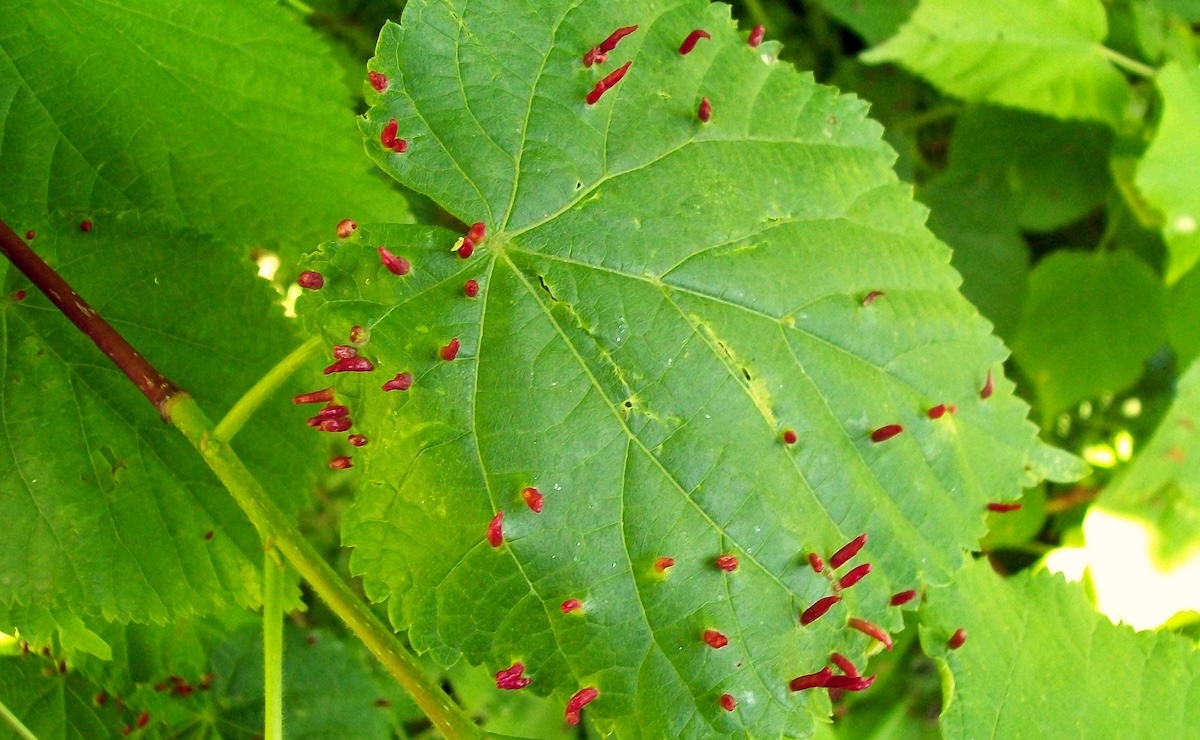
While you rarely see the mites themselves, the symptoms they create are visually distinct. Look for:
Common Signs of Gall Mite Activity
- Small, raised yellow-green bumps, blisters, or wart-like growths
- Deformed, twisted, or thickened new leaves or shoots
- Irregular or clustered swellings along stems
- Galls that start soft and green, then harden or darken over time
On Texas sage and tecoma, two extremely common plants in Phoenix landscapes, galls often appear as tight, blistered clusters on tender new shoots. On elm and hackberry, you may see uneven, lumpy patterns across the leaf surface.
These galls rarely kill a plant outright, but they weaken it significantly, make new growth unattractive, and increase susceptibility to secondary pests and drought stress.
Why Leaf Gall Mites Are So Common in Phoenix
Arizona’s climate creates the perfect breeding ground for eriophyid mites. But a few specific landscape conditions make an infestation even more likely.
1. Warm, Dry Weather
Gall mites thrive during the hot, rain-free months, meaning much of the year in Phoenix is ideal for rapid reproduction.
2. Mild Plant Stress
Plants that are under watered, over watered, over pruned, heat stressed or nutrient imbalanced are far more likely to develop mite issues.
3. Excess Nitrogen
High-nitrogen fertilizers (especially those used for rapid green-up) push tender new growth, which is the exact tissue mites prefer.
4. Overwintering Behavior
Eriophyid mites spend winter hidden in:
- buds
- bark crevices
- leaf scars
Then, as soon as plants flush new spring growth, they emerge and begin feeding. This is why many Phoenix homeowners notice galls suddenly appear with the first wave of new growth in March and April.
How to Treat Leaf Gall Mites
Effective mite management requires addressing both the infestation and the underlying plant-health issues that made the plant vulnerable. At Adaptive Plant Health Solutions, we take a holistic soil-first approach that improves long-term resilience rather than just short-term symptom control.
Here’s what we recommend:
Step 1: Cultural Control (Your First Line of Defense)
Healthy plants repel gall mites naturally. Strengthening the plant is always the most effective strategy.
Prune Out Heavily Infested Growth
- Remove affected shoots and dispose of them (do not compost.)
- Pruning is most effective early in the season before the mites spread.
Correct Irrigation
Deep, infrequent watering encourages strong root systems and reduces plant stress. Shallow, frequent watering weakens plants and increases pest issues.
Improve Soil Health
Additions like:
- organic mulch
- biochar
- composted bark
…help moderate soil temperature, retain moisture, and support beneficial soil fungi around roots.
Balanced fertilization, especially reducing excess nitrogen, prevents the flush of tender new growth mites love.
Step 2: Targeted Miticide or Horticultural Oil Applications
Chemical control must be timed precisely to be effective.
Use Oils or Sulfur-Based Miticides
These products work best early in the growing season when mites are active on exposed new tissue.
Because mites hide inside galls as they mature, sprays are less effective once galls are fully formed.
Severe Infestations Require Re-Treatment
Repeat applications every 10–14 days may be necessary in high-pressure environments or on severely affected shrubs.
Avoid Broad-Spectrum Insecticides
These kill predatory mites and beneficial insects leading to worse outbreaks over time.
Adaptive Plant Health uses highly selective, environmentally considerate materials with minimal impact on beneficial species.
How We Treat Gall Mites
Our approach focuses on both eliminating the active mites and creating a long-term environment where the plant can resist pests naturally.
Our Gall Mite Service Typically Includes:
- Site inspection & plant health diagnosis
- Identification of mite species & damage level
- Pruning recommendations
- Soil moisture analysis
- Fertility & irrigation guidance
- Targeted miticide or horticultural applications (if needed)
- Follow-up monitoring during active seasons
By combining proper plant care with precisely timed treatments, we help homeowners protect their landscapes without unnecessary chemical use.
Think You Have Leaf Gall Mites? We Can Help.
If you’re seeing unusual bumps or distorted growth on your Texas sage, tecoma, or other landscape shrubs, our Phoenix-based plant health experts can diagnose the issue, often the same day.
We serve homeowners throughout:
- Phoenix
- Scottsdale
- Paradise Valley
- Mesa
- Chandler
- Gilbert
- Peoria
- Glendale
- And surrounding areas
Gall mites spread quickly, but with the right care, your plants can recover beautifully. Let our specialists help restore your landscape’s health and vigor. Call 602-777-7764 or fill out a short form to get in touch.