
Arcadia Plant Health Resource Center

Plant Health & Landscape Care for the Arcadia Neighborhood in Phoenix, AZ

Updated Spring, 2026

What To Know About Arcadia Landscapes In Phoenix

Arcadia sits in one of the most coveted pockets of central Phoenix, framed by the southern slopes of Camelback Mountain to the north and the Arizona Canal to the south. The neighborhood’s identity is rooted in the citrus groves that once blanketed this stretch of the Valley. While the commercial orchards were subdivided decades ago, their legacy is everywhere — mature lemon, orange, and grapefruit trees still anchor front and back yards from 44th Street to 68th Street, giving Arcadia a fragrance and character that newer Phoenix communities simply cannot match.

The lots here are generous, often a half-acre or more, and the landscapes that have developed over the past 50 to 70 years reflect that space. Towering Ficus Nitida hedges form living walls between properties, creating the lush, enclosed feel that defines the neighborhood. Fan-Tex Ash trees, many of them planted in the 1970s and 1980s, provide dense overhead shade across patios, driveways, and pool decks. Mature eucalyptus specimens rise above the rooflines, adding height and silvery contrast to the canopy. At ground level, bougainvillea spills over block walls in every shade from magenta to gold, lantana fills planting beds with year-round desert color, and established rose gardens speak to Arcadia’s long tradition of hands-on, investment-level gardening.

Protecting this landscape requires knowledge that’s specific to Arcadia, because the combination of species, soil, microclimate, and age of plant material here is unlike anywhere else in the Valley.
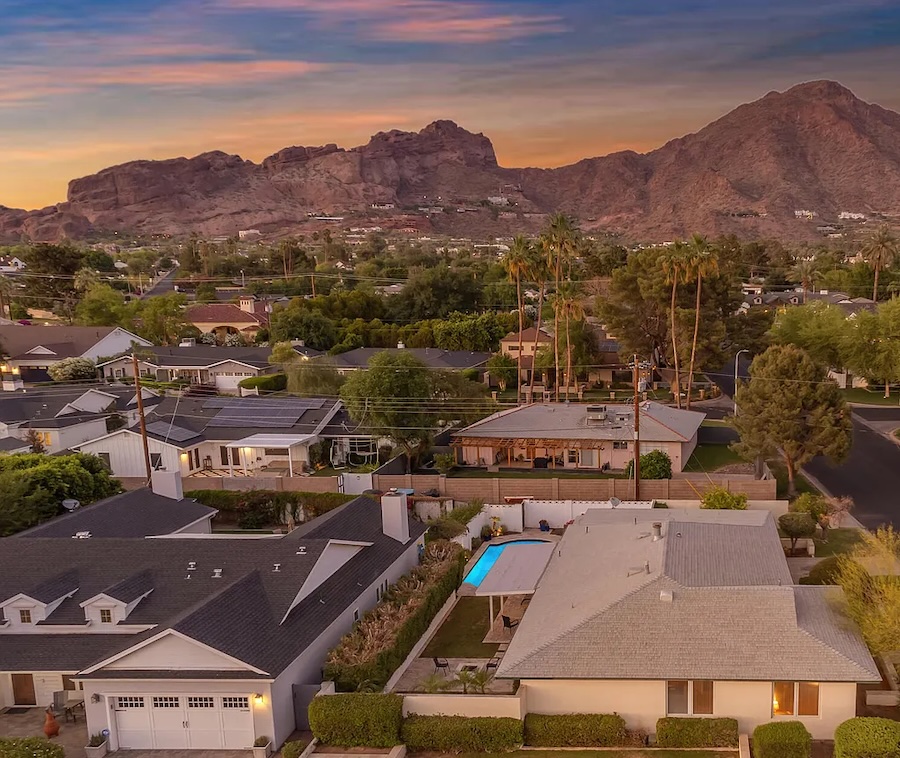
Overhead view of Arcadia landscape with Camelback mountain
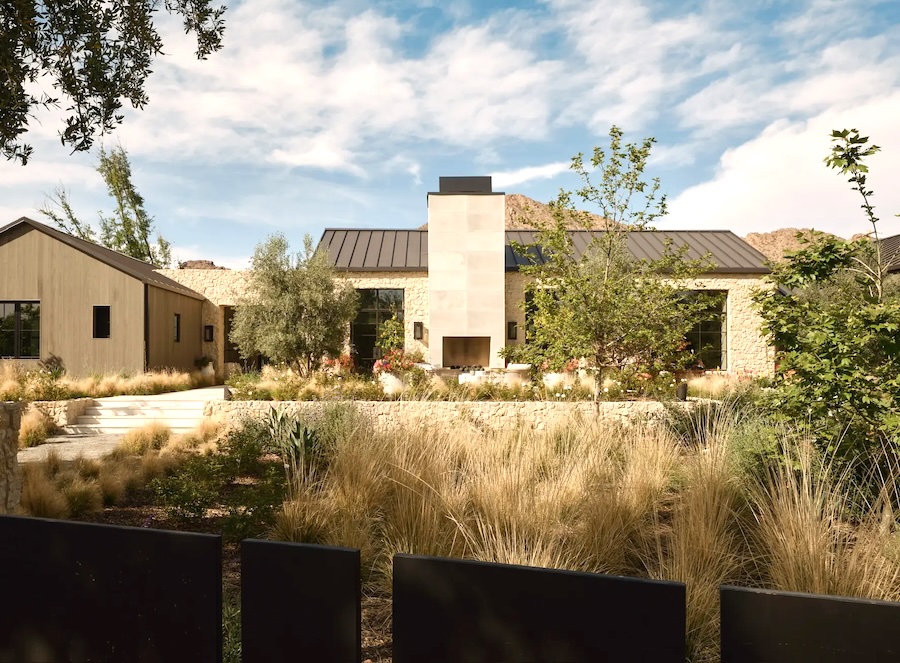
Home in Arcadia, Phoenix, Arizona with outdoor desert landscaping
Quick Downloads:

Arcadia Plant Health Calendar


Timing guide to fertilization, weed treatment, overseeding, pest control and more.

The current state of Plant Health in Arcadia, Phoenix:

Arcadia’s landscapes carry more biomass per lot than almost any neighborhood in the Phoenix metro. That density is what makes the Arcadia landscape so beautiful, but it also means there is more at stake when conditions shift. The convergence of extended drought, back-to-back record heat seasons, and several active pest and disease pressures is putting plant health in Arcadia under a level of stress we haven’t seen before. Below is a detailed look at what’s affecting trees and landscapes in Arcadia, Phoenix right now, and what homeowners between Camelback Mountain and the canal should be doing about it.

Heat, Drought, and Arcadia’s Unique Microclimate

Every neighborhood in the Valley is dealing with heat stress, but Arcadia’s situation is distinct. The dense, mature canopy that makes the neighborhood so livable also creates a localized microclimate — temperatures under the tree cover can be 10 to 15 degrees cooler than exposed pavement, but the trees producing that shade are working harder than ever to sustain themselves. Phoenix logged its second-consecutive year of extreme heat in 2025, 122 days above 100°F, and overnight low temperatures during summer increasingly stay above 90°F, depriving trees of the cool-down period they rely on for recovery.

Arcadia’s landscapes compound this challenge because of their sheer water demand. A typical half-acre Arcadia lot with mature ficus, ash, eucalyptus, citrus, and bougainvillea requires significantly more irrigation than a comparable property planted with native desert species. The Arizona Department of Water Resources has maintained drought declarations through the 2025–2026 water year, and while Arcadia homeowners are not yet facing mandatory cutbacks on landscape water, the long-term trajectory is clear — every gallon needs to count, and trees that aren’t getting water to their full root zone are accumulating damage season after season.

The practical takeaway for Arcadia homeowners in February is this — run your irrigation long enough to push water 24 to 36 inches into the soil profile for major trees, and do it less frequently. A deep soak every two to three weeks during winter is far more effective than short, shallow cycles that only wet the surface and encourage root systems to stay dangerously close to the top of the soil.

Signs of cumulative stress in your landscape: Canopy thinning that seems to get worse each year rather than recovering, leaf drop outside of normal seasonal patterns, new growth that appears stunted or undersized compared to previous years, and bark cracking on trunks exposed to direct afternoon sun.

Citrus Health: The Trees That Define Arcadia

No conversation about tree care in Arcadia is complete without starting with citrus. These are the trees that give the neighborhood its name, its fragrance during spring bloom, and its connection to the agricultural heritage of the Salt River Valley. Many of the citrus trees along the 44th Street to 56th Street corridor are 40 to 60 years old, and citrus health in Arcadia demands a combination of pest management, nutrition, and informed irrigation that goes well beyond basic landscape maintenance.

Asian citrus psyllid and Huanglongbing (Citrus Greening Disease)
The Asian citrus psyllid has been present in the Phoenix area since 2009 and is now well-established across residential neighborhoods including Arcadia. This small insect transmits Candidatus Liberibacter asiaticus, the bacterium that causes Huanglongbing (HLB), widely considered the most serious citrus disease on the planet. HLB has been detected in residential citrus in parts of greater Phoenix, and the Arizona Department of Agriculture maintains an active trapping and survey program. The disease has no cure. Infected trees produce lopsided, bitter fruit, develop blotchy yellow leaves, and gradually decline until they die. The only meaningful defense is preventing psyllid populations from colonizing your trees in the first place through a consistent preventive treatment program.

Citrus leafminer
Walk through any block of Arcadia in the warmer months and you will see citrus leafminer damage on nearly every property. The larvae create winding, silvery tunnels through new leaf tissue as they feed. On established, healthy trees the damage is mostly aesthetic, but on younger plantings or trees already weakened by other stressors, heavy leafminer pressure can meaningfully reduce vigor and fruit production. Timing treatment to coincide with new growth flushes is the key to effective control.

Iron chlorosis and micronutrient deficiency
If your citrus leaves are turning yellow between the veins while the veins themselves stay green, the issue is almost certainly iron chlorosis. This is one of the most common nutritional problems in Arcadia because of the Valley’s highly alkaline, calcium-rich soils, which chemically lock up iron and make it unavailable to plant roots. Shallow watering makes this worse by keeping roots in the most alkaline upper soil layer. A targeted deep-root fertilization program that delivers chelated iron and essential micronutrients directly to the root zone is the most reliable correction, and the results are often visible within weeks.

How to protect your citrus
Check new growth monthly for the tiny orange eggs and waxy white tubules that indicate psyllid activity. Look for the asymmetric, blotchy yellowing pattern characteristic of HLB, which looks distinctly different from uniform chlorosis or normal seasonal color changes. If you see it, contact the Arizona Department of Agriculture. Keep citrus on a professional preventive treatment schedule for psyllid and leafminer, and address iron deficiency with a soil-applied chelated iron program rather than foliar sprays, which provide only temporary improvement.

Ficus Care in Arcadia: Managing the Neighborhood’s Living Walls

Drive down almost any residential street in Arcadia and you’ll see Ficus Nitida, the Indian laurel fig that has been the go-to privacy and screening plant here for decades. These trees form the thick, green walls between properties that give the neighborhood its distinctive enclosed, almost tropical feel. Many of these ficus plantings are 30 to 50 years old, heavily hedged, and represent thousands of dollars in replacement value. They also face a pest that can defoliate them in a matter of weeks.

Ficus whitefly arrived in the Phoenix area and has been cycling through neighborhoods ever since. The insect feeds on the underside of ficus leaves, producing a white, waxy residue and excreting sticky honeydew that coats everything beneath the canopy, including cars, patios, and pool decks. As populations build, affected ficus drop their leaves in waves, sometimes losing their entire canopy. A single defoliation event is recoverable, but repeated cycles over multiple seasons progressively weaken the root system and reduce the tree’s ability to bounce back. Systemic treatment applied as a soil drench around the base of the tree is the standard professional approach — the product is taken up by the roots and distributed through the canopy over several weeks, providing sustained protection that topical sprays cannot match.

One issue specific to Arcadia’s older ficus plantings is decades of aggressive shearing. Many hedges have been machine-trimmed into flat-topped boxes for years, creating an extremely dense outer shell of foliage with almost no interior airflow. This makes whitefly problems harder to catch early, since the insects colonize deep inside the canopy where they’re invisible from the outside. It also promotes fungal conditions and heat trapping. If your ficus have been maintained this way, consider transitioning to a selective hand-pruning approach that opens up the interior without sacrificing privacy. Your plant health professional can help you develop a thinning plan that balances aesthetics with tree health.

Early warning signs
A haze of tiny white insects when you shake a ficus branch, sticky, shiny residue accumulating on leaves or surfaces beneath the canopy, patches of yellow or pale leaves appearing in sections of an otherwise green hedge, and sooty black mold growing on honeydew deposits.

Ash Tree Care in Arcadia: An Aging Canopy Under Pressure

The Fan-Tex ash is the dominant shade tree in Arcadia. Planted extensively from the 1970s through the 1990s for its rapid growth and broad, dense canopy, it quickly became the tree that defines the overhead experience of the neighborhood, arching over driveways, shading pools, and cooling patios across the area. Many of these trees are now 35 to 50 years old, and a growing number are showing signs of serious decline.

The problem is multifactorial. Repeated extreme heat seasons have depleted energy reserves in trees that were already working at their physiological limits during summer. Ash bark beetles and flatheaded appletree borers exploit this weakness, tunneling beneath the bark to feed on the cambium, the thin layer of tissue responsible for moving water and nutrients through the tree. Once borers are established, the damage accelerates — branches die back from the top of the canopy downward, bark begins to crack and separate on the trunk, and the tree enters a decline spiral that is difficult to reverse without intervention.

A contributing factor in Arcadia specifically is that many ash trees were planted in heavily amended backfill soil and irrigated with shallow systems designed for lawn, not trees. Over time, the roots stayed concentrated near the surface rather than driving deep into the native soil profile. These shallow-rooted trees are more susceptible to heat stress, wind throw, and drought damage than trees with deep, well-distributed root systems. Correcting this requires a deliberate shift to deep, infrequent irrigation that encourages roots to follow the water downward. Supplemental care such as trunk-injected insecticide for borer prevention and deep-root fertilization to rebuild energy reserves can add years of productive life to a declining ash tree, but the window for effective treatment closes once canopy loss exceeds roughly 30 to 40 percent.

What declining ash trees look like
A noticeably thinner crown compared to two or three years ago, dead branches accumulating in the upper canopy, leaves that are smaller or lighter green than normal, bark splitting or flaking on the trunk and major scaffold limbs, and small, D-shaped exit holes in the bark left by emerging adult borers.

Eucalyptus Pests: Lerp Psyllid and Longhorned Borers

Eucalyptus trees are scattered throughout Arcadia, often standing as the tallest specimens on a property. Their height, peeling bark, and silver-green foliage give them a distinctive character, and they serve a practical role as windbreaks and visual screens for two-story homes. They’re drought-adapted once established, but that resilience has limits, and two insect pests are testing those limits across the neighborhood.

Red Gum Lerp Psyllid
Present in Arizona for over 20 years, this insect feeds on eucalyptus leaves beneath small, white crystalline shelters called lerps. Individual lerps are harmless, but when populations explode during drought-stressed seasons, the cumulative feeding damage causes significant leaf yellowing, drop, and branch dieback. Trees under irrigation stress are far more susceptible to heavy infestations.

Eucalyptus Longhorned Borers
These wood-boring beetles lay eggs in bark crevices on weakened trees. The larvae chew through the cambium and sapwood, creating galleries that girdle branches and trunks from the inside. Outward symptoms include weeping sap from small holes in the bark, branch death, and bark that pulls away to reveal tunneling damage beneath. Keeping eucalyptus deeply irrigated and avoiding unnecessary pruning wounds are the best preventive strategies.

What to monitor
Clusters of small white bumps on eucalyptus leaves (lerps), sticky residue beneath the canopy, sap weeping from the trunk or major branches, and any branch that drops its leaves while the rest of the tree appears healthy.

Bougainvillea Looper Caterpillar

Bougainvillea is one of Arcadia’s most visible ornamental plantings, draping over block walls and fences in vivid purples, magentas, and oranges from spring through late fall. These plants are tough, heat-loving, and low-water once established, but they have an annual nemesis — the bougainvillea looper, a small green caterpillar that feeds on the leaves and can defoliate an entire plant in days when populations spike.

Looper outbreaks typically ramp up in late spring and continue through the warm months. The caterpillars are nearly the same color as the foliage, so they’re easy to miss until you notice large sections of bare stems where there used to be leaves. A healthy bougainvillea will push new growth and recover from a single defoliation event, but back-to-back attacks over a season reduce flowering, weaken the root system, and leave the plant looking sparse heading into winter. A timely application of a targeted biological insecticide like Bt (Bacillus thuringiensis) at the first sign of chewing damage is the most effective and least disruptive approach.

Signs of looper activity
Irregular chewing damage on leaves that progresses to completely stripped stems, small green droppings (frass) on the ground beneath the plant, and caterpillars visible on the undersides of leaves, especially in the early morning or evening.

Oleander Leaf Scorch Along the Arcadia Corridor

Oleander is not the dominant screening plant in Arcadia the way ficus is, but it’s still widely used along back walls, side yards, and in common area plantings throughout the Arcadia corridor. Oleander leaf scorch (OLS) is an incurable bacterial disease that has been moving through Phoenix-area neighborhoods since it was first identified locally in 2004. The pathogen, Xylella fastidiosa, clogs the water-conducting vessels inside the plant, causing progressive dieback that mimics drought stress but does not respond to additional irrigation.

The disease spreads via the glassy-winged sharpshooter, an insect that picks up the bacterium while feeding on an infected plant and deposits it into healthy plants as it moves through the neighborhood. In a community like Arcadia, where properties are close together and oleander hedges often span multiple lots, one infected plant can serve as a source of infection for an entire block. Symptoms start as browning along the leaf edges and advance inward until whole branches die. The entire plant typically follows within three to five years of the first visible symptoms.

What Arcadia homeowners should do
Examine oleander hedges for leaf-edge browning that does not improve with watering. If you confirm OLS, remove the affected plants promptly rather than waiting for them to die, since every day they remain in the ground they serve as a bacterial reservoir for sharpshooter transmission. Replacement options that perform well in Arcadia’s microclimate include hop bush, Arizona yellow bells, and various Leucophyllum species (Texas sage), all of which provide screening without the disease vulnerability.

February Action Items for Arcadia Homeowners
  1. Deep-water your major trees now. February is the most important month to ensure your ash, ficus, eucalyptus, and citrus are getting water to the full depth of their root zone. For mature trees, that means soaking the soil 24 to 36 inches deep on a two- to three-week cycle. Run a screwdriver or soil probe into the ground 24 hours after irrigating — if it won’t push past 12 inches, you need to increase your run time.
  2. Scout your citrus for psyllid and chlorosis. Flip over the newest growth on each citrus tree and look for tiny orange eggs or white, tubular nymph casings. While you’re inspecting, note whether leaves are showing green-vein yellowing, the hallmark of iron chlorosis. Both issues are highly treatable when caught early and increasingly damaging when ignored.
  3. Shake-test your ficus for whitefly. Grab a branch in the interior of a ficus hedge and give it a firm shake. If a cloud of tiny white insects rises, you have an active whitefly population that will cause defoliation once temperatures climb. A professional soil drench treatment applied in late winter or early spring provides protection through the critical warm-season months.
  4. Walk your property and evaluate ash tree canopies. Stand back and compare each ash tree’s canopy to what it looked like two or three years ago. If the crown is noticeably thinner, or if you can see dead branch tips silhouetted against the sky, the tree is telling you it’s in decline. Contact a plant health professional before spring growth begins — early-season treatments for borer prevention and deep-root fertilization are significantly more effective than mid-summer interventions.
  5. Book a professional landscape assessment. Arcadia’s landscapes are among the most valuable in Phoenix, and the cost of replacing a single mature shade tree can easily exceed several thousand dollars. A thorough, expert walkthrough of your property in February, before the heat and pest pressure of spring and summer, gives you a clear picture of which trees and plantings need attention and what can wait. Prevention is always less expensive than emergency removal.

Questions about your Arcadia landscape?

Whether you need a quick answer about a specific tree or want a comprehensive property evaluation, our team is here to help Arcadia homeowners protect their landscapes. Call us at (602) 777-7764 or reach out through our contact form to schedule a free 15-point landscape inspection.