
Marlborough Park Plant Health Resource Center
Customized for your neighborhood by Adaptive Plant Health & Weed Solutions
Updated Fall, 2026
A guide to Marlborough Park
Plant Health
This page will teach you about the unique needs of your neighborhood and how to best care for your landscape.
Up-To-Date Information
We update this page as we see new trends, changes and threats like insects, diseases or plant stressors.
What to know about Marlborough Park Landscapes
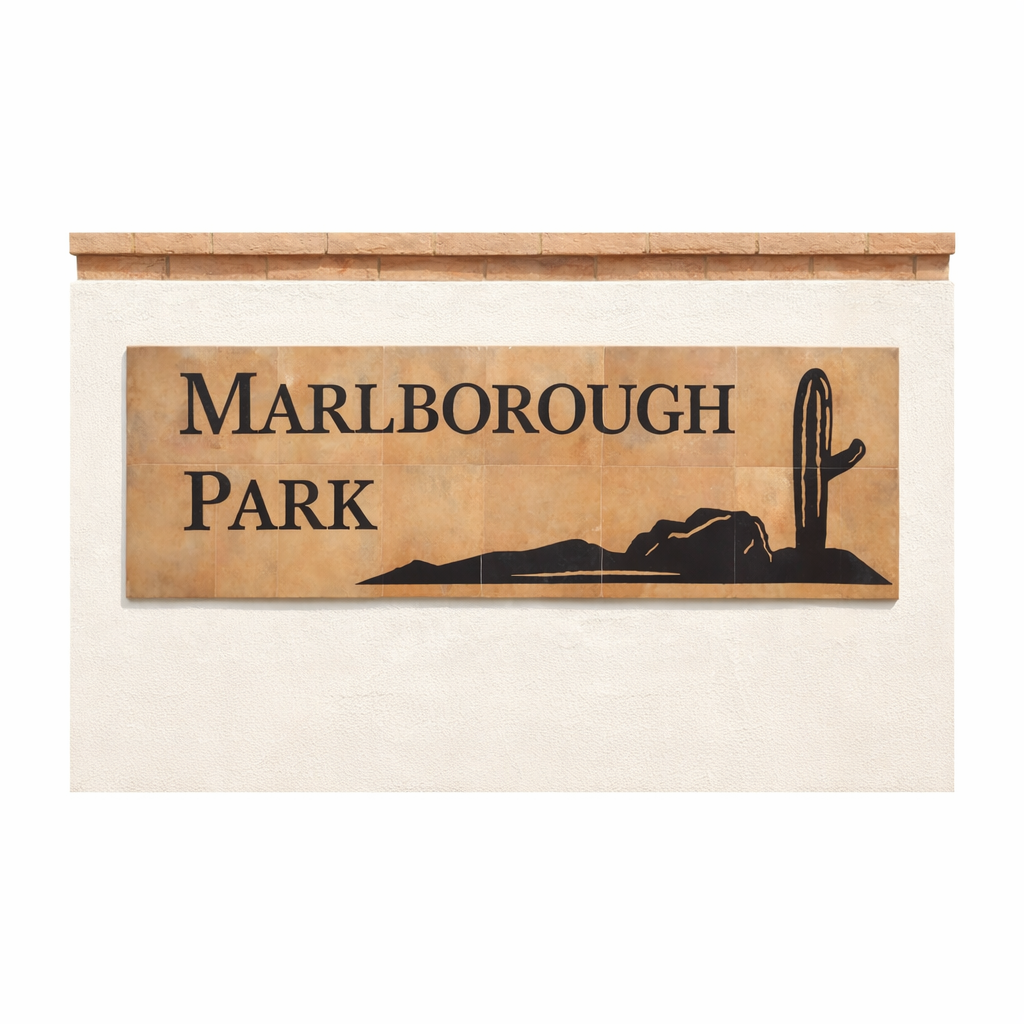
Marlborough Park is an established Tempe neighborhood built primarily in the 1970s and 1980s, featuring single-family homes on comfortable lots with mature landscapes that give the community a shaded, settled character.
The tree palette here represents a classic late-twentieth-century Valley mix: Eldarica (Mondell) pines were planted heavily for evergreen screening, eucalyptus for fast shade, and mulberry for dense summer canopy.
At ground level, Texas sage, jojoba, and creosote provide structure and drought tolerance.
Marlborough Park’s landscape is now 35 to 50 years old, and the pine and eucalyptus populations in particular are reaching a stage where decline, structural failure, and disease demand proactive attention from every homeowner.
Quick Downloads:
Marlborough Park Plant Health Calendar
Timing guide to fertilization, weed treatment, overseeding, pest control and more.
Tree, & Shrub Watering Guide
Recommendations for when and how much to water, with adjustments for time of year
Tree Identification & Care Guide
Facts about each type of tree in the neighborhood and a guide to keeping them healthy
Marlborough Park Landscape Care, Season By Season
By Cameron, ISA Certified Arborist, Adaptive Plant Health & Weed Solutions
Marlborough Park’s aging canopy of Eldarica pine, eucalyptus, and mulberry, backed by classic desert-adapted Texas sage, jojoba, and creosote in the beds, faces a different set of pressures depending on the time of year. Bark beetles and storm risk peak in summer, pines are easy to under-water in winter since they never go fully dormant, and the neighborhood’s mature mulberries turn into a spring allergen problem almost every year. Here’s what to know and when to act, organized by season.
Heat & Smart Watering Come First
Marlborough Park’s older trees have less reserve capacity to handle peak summer heat, and drought stress is what opens the door to the bark beetles and canker problems below. Water deep and infrequent, soaking the root zone 24 to 36 inches down, rather than running short daily cycles that keep roots shallow.
Monsoon Storm Prep Is the Top Priority
Marlborough Park’s mature Eldarica pines and eucalyptus carry decades of canopy growth, and a weak limb or leaning trunk can fail fast once monsoon winds arrive (June 15 through September 30). Have large, older trees structurally evaluated each spring, before the first storm, rather than waiting to see what comes down.
Eldarica Pine & Ips Bark Beetle
Heat and drought-stressed Eldarica pines are prime targets for Ips bark beetles, especially from May through September, and an infested pine usually can’t be saved once the beetles establish. Watch for fading or browning needles, pitch tubes, and sawdust-like frass at the base or in bark crevices, and keep pines deeply watered as the best prevention.
Eucalyptus Pests & Limb Failure
Eucalyptus longhorned borer targets drought-stressed trees through the warm months, and eucalyptus wood is also naturally prone to sudden limb drop, a real risk under a mature canopy even without visible disease. Keep trees well watered to resist borers, and have any large eucalyptus with a history of dropped limbs evaluated before it sits over a patio or driveway.
Mulberry & Sooty Canker
Marlborough Park’s older mulberries are vulnerable to sooty canker, a fungal disease that enters through sun-damaged or wounded bark and can kill large limbs, most active during and after peak summer heat stress. Look for dark, sunken bark cankers or sudden limb dieback, and have affected limbs removed promptly since the fungus spreads through the wood.
Texas Sage, Jojoba & Creosote
Texas sage, jojoba, and creosote are all genuinely low-water natives, and the most common way homeowners damage them is overwatering, which invites root rot far more often than drought ever does. Let soil dry out between cycles year round, and expect Texas sage to bloom in a purple flush a few days after any good rain rather than on a fixed schedule.
Winter Watering for Eldarica Pines
Eldarica pines are evergreen and keep transpiring through the winter, so they’re easy to under-water once homeowners assume cooler weather means trees have gone dormant. Cut back irrigation frequency in winter but don’t stop it, and watch for needle yellowing or thinning, which is often a sign of chronic winter under-watering rather than disease.
Spring Mulberry Pollen Management
Marlborough Park’s mature mulberries release heavy pollen each spring, typically February through April, and male mulberry trees are one of the Valley’s most notorious seasonal allergens. There’s no treatment for the tree itself, but keeping canopies well pruned and thinned can reduce pollen load, and homeowners with severe allergies may want to discuss replacement options for trees closest to the house.
Marlborough Park Homeowner Action Items
- Water deep and infrequent through peak summer heat, since drought stress is what opens the door to bark beetles and canker.
- Storm-proof mature pines and eucalyptus each spring, ahead of monsoon season, especially any tree with a history of dropped limbs.
- Watch Eldarica pines for fading needles and pitch tubes from May through September, a sign of Ips bark beetle activity.
- Inspect mulberries for sooty canker cankers and remove affected limbs promptly to keep the fungus from spreading.
- Do not overwater Texas sage, jojoba, or creosote. Let soil dry between cycles, and expect Texas sage to bloom after rain.
- Keep watering Eldarica pines through winter, expect mulberry pollen each spring, and book a seasonal health check to catch storm-risk limbs early.
Need some guidance?
If you have any questions about plant health or your landscape, feel free to give us a call at (602)777-7764 or fill out our contact form.
Anything from a quick question to a free 15-point landscape inspection, we’re here to help.