
McCormick Ranch Plant Health Resource Center
Plant Health & Landscape Care For The McCormick Ranch Neighborhood In Scottsdale, AZ
Updated Summer, 2026
A guide to McCormick Ranch Plant Health
This page will teach you about the unique needs of your neighborhood and how to best care for your landscape.
Up-To-Date Information
We update this page as we see new trends, changes and threats like insects, diseases or plant stressors.
What to know about McCormick Ranch Landscapes
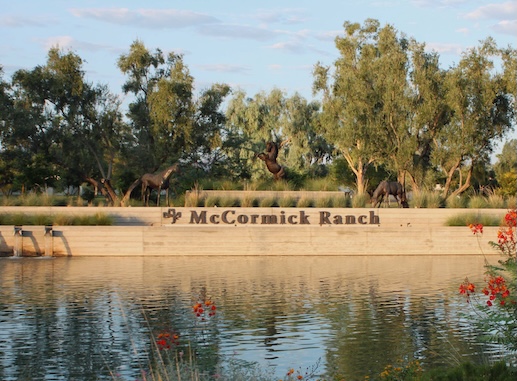
McCormick Ranch is one of central Scottsdale’s largest master-planned communities, roughly seven square miles between Indian Bend Road and Shea Boulevard. Built from the 1970s around ten man-made lakes, lush greenbelts, and two championship golf courses, the Palm and Pine courses named for their signature trees, it set the template for resort-style living in the Valley.
That design shapes the plant palette. Towering Canary Island date palms and Mondell pines line the streets and fairways, mature eucalyptus rises above the rooflines, and the lakes, greenbelts, and bike paths are framed by turf and desert accents like red yucca, brittlebush, and lantana.
Protecting this landscape means understanding the specific needs of these mature palms, pines, and shade trees, from monsoon-season structure to disciplined, lake-adjacent irrigation.
Quick Downloads:
McCormick Ranch Plant Health Calendar
Timing guide to fertilization, weed treatment, overseeding, pest control and more.
Tree, & Shrub Watering Guide
Recommendations for when and how much to water, with adjustments for time of year
Tree Identification & Care Guide
Facts about each type of tree in the neighborhood and a guide to keeping them healthy
The Current State Of Plant Health In McCormick Ranch:
Updated by Cameron, ISA Certified Arborist, June 2026
McCormick Ranch packs a lot of mature canopy into central Scottsdale, and summer is when those palms, pines, and shade trees are tested hardest. We’re in peak heat with monsoon season active (June 15 through September 30), forecast hotter and wetter than normal, while the Valley stays in drought under Stage 2 water rules. With ten lakes, miles of greenbelt, and golf-course-grade landscaping, both water use and storm exposure run high here. Here’s what to watch for right now.
Heat & Smart Watering Come First
High daytime heat and warm overnight lows give trees little recovery time, and Stage 2 rules mean watering has to be efficient. Water mature trees and palms deep and infrequent to the full root zone, and keep desert accents like red yucca and brittlebush off the high-water turf and greenbelt zones where overwatering does the most harm.
Monsoon Storm Prep Is the Top Priority
Tall eucalyptus, Canary Island date palms, and Mondell pines are the most exposed to monsoon microbursts, which can snap a limb or topple a tree in seconds. Have high, heavy, or leaning trees structurally evaluated and thinned before the next storm. This is the single most valuable thing you can do this summer.
Canary Island Date Palm Threats (Weevil + Fusarium)
The South American palm weevil is spreading through the region and is drawn to freshly pruned and wounded palms, while Fusarium wilt spreads on dirty pruning tools and causes one-sided frond death. Avoid heavy summer palm pruning, use only crews that sterilize tools between trees, and report any palm with a collapsing or one-sided crown immediately.
Mondell Pine & Ips Bark Beetle
The Mondell pines planted across McCormick Ranch in the 1970s and 1980s are aging out of the Valley climate, and summer heat and drought stress make them prime targets for Ips bark beetles, which a heavily infested pine rarely survives. Keep healthy pines deeply watered, avoid soil compaction, and watch for fading or browning needles, pitch tubes, and sawdust-like frass.
Eucalyptus Pests & Limb Failure
Beyond the storm risk, drought-stressed eucalyptus draw red gum lerp psyllid and longhorned borers that feed beneath the bark on weakened trees. Keep them deeply irrigated, avoid unnecessary pruning wounds, and watch for weeping sap and branches that drop their leaves while the rest of the tree looks fine.
Red Yucca, Brittlebush & Lantana: Do Not Overwater
These desert accents are the most climate-suited plants in the neighborhood and decline fastest from too much water, especially when they share a zone with turf. Keep them low-water, expect brittlebush to look sparse during peak heat (a normal summer response), and watch lantana for lace bug stippling in the warm months.
Summer Action Items For McCormick Ranch Homeowners
- Storm-proof your tall trees now. Schedule structural thinning for eucalyptus, Canary Island date palms, and Mondell pines before the next monsoon push. This is the top safety priority.
- Protect your palms. Hold off on heavy summer pruning, insist on tool sanitation, and ask about preventive trunk treatment for high-value date palms.
- Check Mondell pines for beetle activity. Look for pitch tubes, frass, and fading needles, and have declining pines assessed before they become a hazard or beetle source.
- Right-size your watering. Deep and infrequent for trees and palms, low for desert accents, and separate desert shrubs from greenbelt and lake-adjacent turf zones where you can.
- Book a summer health check. A walkthrough now catches heat stress, beetle activity, and storm-risk limbs before they become emergencies.
Frequently Asked Questions About McCormick Ranch Landscapes
What are the most common summer tree problems in McCormick Ranch?
McCormick Ranch’s signature trees each face distinct summer threats. Canary Island date palms are vulnerable to the South American palm weevil and Fusarium wilt, Mondell pines are prime targets for Ips bark beetles under heat and drought stress, and mature eucalyptus carry the highest monsoon limb-failure risk. Adaptive’s ISA Certified Arborists monitor all three and recommend preventive care before damage becomes irreversible.
How do I protect my McCormick Ranch palms and pines during monsoon season?
Tall Canary Island date palms, Mondell pines, and eucalyptus are the most exposed to monsoon microbursts, which can snap limbs or topple trees in seconds. The best protection is a professional structural evaluation and canopy thinning before the next storm, along with deep, consistent watering so roots stay strong. Avoid heavy summer palm pruning, which attracts the palm weevil.
Why are the pines in McCormick Ranch declining?
The Mondell (Afghan) pines planted across McCormick Ranch in the 1970s and 1980s are reaching the end of their comfortable lifespan in the Valley’s climate, and summer heat and drought stress make them prime targets for Ips bark beetles. Watch for fading or browning needles, pitch tubes, and sawdust-like frass, and have declining pines assessed early, since a heavily infested pine usually cannot be saved.
How often should I water my landscape in McCormick Ranch during summer?
Mature trees and palms need deep, infrequent watering that reaches 24 to 36 inches into the soil rather than short daily cycles, while desert accents like red yucca and brittlebush need very little water and decline when overwatered. Because McCormick Ranch has extensive greenbelt turf and lake-adjacent landscaping, it is easy to overwater trees and shrubs that share a turf zone, so separate the zones where you can. Adaptive can audit your irrigation under the current Stage 2 drought rules.
Need some guidance?
If you have any questions about plant health or your landscape, feel free to give us a call at (602)777-7764 or fill out our contact form.
Anything from a quick question to a free 15-point landscape inspection, we’re here to help.