
Arcadia Plant Health Resource Center
Plant Health & Landscape Care for the Arcadia Neighborhood in Phoenix, AZ
Updated Summer, 2026
A Guide To Arcadia Plant Health
This page will teach you about the unique needs of your neighborhood and how to best care for your landscape.
Up-To-Date Information
We update this page as we see new trends, changes and threats like insects, diseases or plant stressors.
What To Know About Arcadia Landscapes In Phoenix
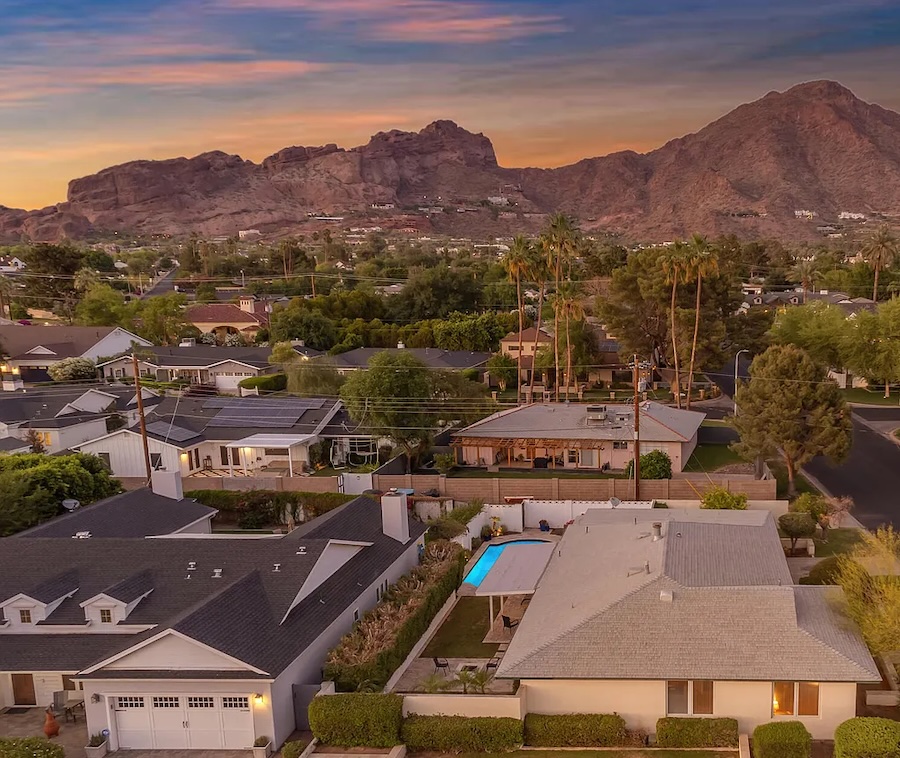
Arcadia sits in one of the most coveted pockets of central Phoenix, framed by the southern slopes of Camelback Mountain to the north and the Arizona Canal to the south. The neighborhood’s identity is rooted in the citrus groves that once blanketed this stretch of the Valley. While the commercial orchards were subdivided decades ago, their legacy is everywhere. Mature lemon, orange, and grapefruit trees still anchor front and back yards from 44th Street to 68th Street, giving Arcadia a fragrance and character that newer Phoenix communities simply cannot match.
The lots here are generous, often a half-acre or more, and the landscapes that have developed over the past 50 to 70 years reflect that space. Towering Ficus Nitida hedges form living walls between properties, creating the lush, enclosed feel that defines the neighborhood. Fan-Tex Ash trees, many of them planted in the 1970s and 1980s, provide dense overhead shade across patios, driveways, and pool decks. Mature eucalyptus specimens rise above the rooflines, adding height and silvery contrast to the canopy. At ground level, bougainvillea spills over block walls in every shade from magenta to gold, lantana fills planting beds with year-round desert color, and established rose gardens speak to Arcadia’s long tradition of hands-on, investment-level gardening.
Protecting this landscape requires knowledge that’s specific to Arcadia, because the combination of species, soil, microclimate, and age of plant material here is unlike anywhere else in the Valley.
Quick Downloads:
Arcadia Plant Health Calendar
Timing guide to fertilization, weed treatment, overseeding, pest control and more.
Tree, & Shrub Watering Guide
Recommendations for when and how much to water, with adjustments for time of year
Tree Identification & Care Guide
Facts about each type of tree in the neighborhood and a guide to keeping them healthy
The Current State Of Plant Health In Arcadia, Phoenix:
Updated by Cameron, ISA Certified Arborist, June 2026
Arcadia carries more biomass per lot than almost any neighborhood in the Valley, and summer is when all that lush canopy is under the most strain. We’re in peak heat with monsoon season active (June 15 through September 30), forecast hotter and wetter than normal, while the region stays in drought under Stage 2 water rules. Here’s what’s affecting Arcadia’s trees and landscapes right now and what homeowners between Camelback and the canal should do.
Heat & Watering Are the Whole Game
A typical Arcadia lot with mature ficus, ash, eucalyptus, and citrus demands far more water than a desert-native yard, and with high overnight lows the trees barely recover. Water deep and infrequent, pushing moisture 24 to 36 inches into the soil for major trees, rather than shallow daily cycles. A soil probe that stops at 12 inches a day after watering means you need a longer run time.
Monsoon Storm Prep for Ash & Eucalyptus
Aging Fan-Tex ash and tall eucalyptus are Arcadia’s highest storm-failure risks, and microbursts can drop a large limb onto a roof, car, or pool deck. Have big or declining trees structurally thinned and evaluated before the next storm. This is the top safety priority of the season.
Citrus in Summer: Pests, Chlorosis & Sunburn
Keep citrus on a preventive program for Asian citrus psyllid (the vector for incurable HLB) and citrus leafminer, which tunnels through each new growth flush. Treat green-vein yellowing as iron chlorosis with a soil-applied chelated iron program, and protect newly exposed bark and fruit from summer sunburn by maintaining canopy shade.
Ficus Whitefly on the Living Walls
Arcadia’s Ficus Nitida hedges defoliate fast when whitefly populations build in the heat, dropping leaves in waves and coating everything below with sticky honeydew. A systemic soil drench is the standard professional fix, and opening up over-sheared hedges with selective hand-pruning improves airflow and makes infestations easier to catch.
Aging Ash Under Pressure
Many Fan-Tex ash are now 35 to 50 years old, and repeated record heat is pushing them into decline, with borers exploiting the weakness. Watch for thinning crowns, dead upper branches, bark splitting, and small D-shaped exit holes, and get any declining ash assessed, since treatment options close once canopy loss passes roughly 30 to 40 percent.
Eucalyptus Pests & Bougainvillea Looper
Drought-stressed eucalyptus draw red gum lerp psyllid and longhorned borers, so keep them deeply watered and avoid unnecessary pruning wounds. Bougainvillea looper caterpillars also peak in the warm months, stripping leaves in days, and respond well to a timely application of Bt at the first sign of chewing.
Summer Action Items For Arcadia Homeowners
- Deep-water your major trees. Soak ash, ficus, eucalyptus, and citrus to the full root zone on a longer, less frequent cycle, and probe the soil to confirm depth.
- Storm-proof ash and eucalyptus now. Schedule structural thinning before the next monsoon push. This is the highest-priority safety action.
- Scout citrus monthly. Check new growth for psyllid and leafminer, and treat green-vein yellowing as iron chlorosis at the root zone.
- Shake-test your ficus. If a cloud of white insects rises, book a systemic soil treatment before further defoliation.
- Book a professional assessment. Replacing a single mature Arcadia shade tree can cost thousands, and a summer walkthrough catches problems while they are still treatable.
Questions about your Arcadia landscape?
Whether you need a quick answer about a specific tree or want a comprehensive property evaluation, our team is here to help Arcadia homeowners protect their landscapes. Call us at (602) 777-7764 or reach out through our contact form to schedule a free 15-point landscape inspection.