
Broadmor Plant Health Resource Center
Customized for your neighborhood by Adaptive Plant Health & Weed Solutions
Updated Spring, 2026
A guide to Broadmor Plant Health
This page will teach you about the unique needs of your neighborhood and how to best care for your landscape.
Up-To-Date Information
We update this page as we see new trends, changes and threats like insects, diseases or plant stressors.
What to know about Broadmor Landscapes
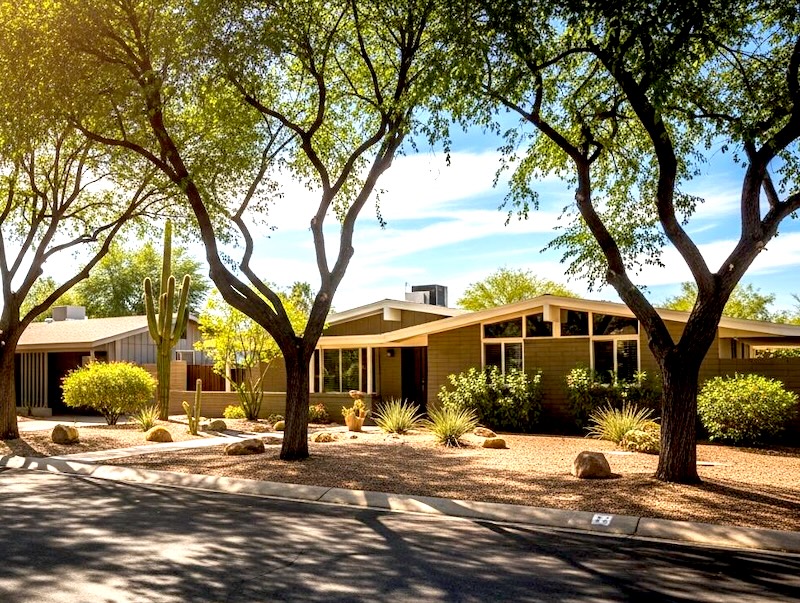
Broadmor is a family-oriented central Tempe neighborhood with older, well-established landscapes built primarily in the 1970s and 1980s. The community features comfortable single-family homes on lots large enough to support significant tree canopy, and the streets and yards of Broadmor reflect the mixed planting philosophy of the era: ash trees for fast shade, Chinese elms for long-lived structure, and palo verde for desert character. Texas sage, tecoma, and hibiscus fill the shrub layer with color and texture.
Broadmor’s landscape is 35 to 50 years old, placing it in the window where the ash population is declining, Chinese elms are reaching full maturity, and the desert-adapted species are demonstrating why they were always the better long-term investment for Valley landscapes.
Quick Downloads:
The Current State Of Broadmor Plant Health
Timing guide to fertilization, weed treatment, overseeding, pest control and more.
Tree, & Shrub Watering Guide
Recommendations for when and how much to water, with adjustments for time of year
Tree Identification & Care Guide
Facts about each type of tree in the neighborhood and a guide to keeping them healthy
The current state of plant health in Broadmor
Updated by Cameron, ISA Certified Arborist
Spring, 2026
The pattern is consistent across Broadmor: ash trees that provided decades of shade are now thinning, dropping branches, and attracting boring insects as they weaken. Upper canopy dieback, bark splitting, and frass accumulation at trunk bases are all widespread indicators. Broadmor homeowners should have every ash tree over 30 years old professionally evaluated to determine whether targeted care can extend its life or whether replacement planning should begin.
Chinese Elm: The Bridge to a New Canopy
Chinese elms in Broadmor are generally healthier than the ash population and will form the backbone of the neighborhood’s canopy as ash trees are removed. Maintaining these elms with deep irrigation, monitoring for Texas root rot, and addressing elm leaf beetle infestations promptly keeps them performing well through the transition period. These trees are worth investing in.
Palo Verde: Desert-Adapted and Increasingly Valuable
As ash declines and is removed, the palo verde trees planted in Broadmor take on increasing importance as canopy providers. These trees are well-adapted to the climate and require minimal care beyond occasional structural thinning and monitoring for root borer activity. New plantings of desert museum palo verde make excellent ash replacements and establish quickly in Broadmor’s soil conditions.
Texas Sage, Tecoma, and Hibiscus: The Reliable Foundation
Broadmor’s shrub palette includes three species that perform well with appropriate care. Texas sage thrives on low water and declines when overirrigated. Tecoma needs annual frost pruning in late spring. Hibiscus requires protection from hard freezes and benefits from late-winter fertilization to fuel spring growth. Maintaining these shrubs properly provides year-round structure and color regardless of what is happening in the canopy layer above.
Spring Action Items for Broadmor Homeowners
- Evaluate aging ash trees for borer activity and structural integrity. Any ash showing upper canopy decline should be professionally assessed. Plan removal and replacement before monsoon season if the tree is structurally compromised.
- Invest in Chinese elm health. Deep irrigation covering the full root zone, annual monitoring for Texas root rot, and spring pest treatment keep these valuable bridge-canopy trees vigorous through the neighborhood’s transition period.
- Thin palo verde canopies for wind resistance. Light structural pruning every two to three years maintains form and reduces monsoon damage risk.
- Prune frost-damaged tecoma and hibiscus. Wait until the damage is fully visible in spring, then cut back to live tissue. Fertilize hibiscus after pruning to support spring recovery.
- Ensure Texas sage is on a separate low-water irrigation zone. This drought-adapted species declines rapidly when overwatered. A deep soak every two to three weeks in winter and weekly in summer is sufficient.
Need some guidance?
If you have any questions about plant health or your landscape, feel free to give us a call at (602)777-7764 or fill out our contact form.
Anything from a quick question to a free 15-point landscape inspection, we’re here to help.