
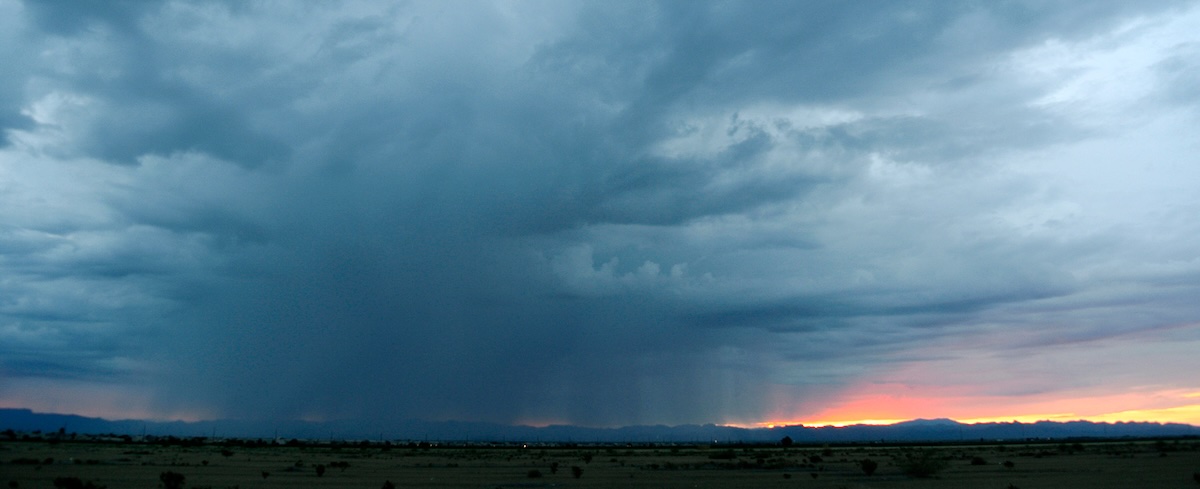
El Niño Is Coming: What a Wet Winter Means for Your Phoenix Landscape
In its July 2026 update, NOAA’s Climate Prediction Center made it official: a strong El Niño is developing in the Pacific, and it is expected to peak just as the Valley heads into winter. Forecasters give the event an 81% chance of reaching “very strong” intensity between October and December 2026, and a 97% chance of lasting into early spring 2027. For the Phoenix metro area, that historically points toward one thing: a wetter than normal winter.
If you own a home or manage a property here, that forecast matters. Winter rain reshapes desert landscapes in ways that play out over the following six to twelve months, some of them wonderful and some of them expensive. Our team has managed Phoenix-area landscapes through multiple El Niño cycles, and the pattern is consistent: trees and shrubs come out of a wet winter noticeably healthier, but weed pressure explodes, and disease and pest problems climb right along with all that new growth.
Here is what we expect this winter, why it happens, and what you can do between now and October to get ahead of it.
When Will El Niño Hit Arizona, and What Will It Do?
The short answer: this winter. While the ocean event itself peaks between October and December 2026, Arizona feels El Niño through the winter storm track, which shifts south and steers more Pacific storms across the state between roughly October and March. The strongest effect typically lands from December through March. One common misconception is worth clearing up: El Niño does not make our summers wetter. If anything, it can delay and weaken the following summer’s monsoon. For your landscape, the impact window is winter and early spring.
During moderate to strong El Niño episodes, Arizona sees an increased frequency of above-normal winter precipitation. According to University of Arizona climate researchers, parts of southern Arizona have averaged around 180% of normal winter rainfall during the strongest events.
One honest caveat before we go further: El Niño loads the dice, but it does not guarantee rain. The 1997-98 event delivered a soaking winter across the Southwest, while the record-strength 2015-16 event famously underperformed. Forecasters call that one a “bust.” So treat this winter as a strong probability of above-average rain, not a certainty. From a landscape management standpoint, though, the smart move is the same either way: prepare for the wet scenario, because the cost of being wrong is much higher in that direction.
The Bad News First: Weeds, Weeds, and More Weeds
Every extra storm this winter is a germination event. Phoenix’s winter annual weeds, including London rocket, filaree, mustards, sow thistle, and annual bluegrass, drop seed that sits dormant in your soil waiting for two triggers: soil temperatures falling below about 70°F and moisture. In a normal winter, only a fraction of that seed bank gets the moisture it needs. In an El Niño winter, storm after storm keeps the top layer of soil damp for weeks at a time, and germination happens in repeated flushes from November all the way into February.
Wet winters create a second, sneakier problem: rain degrades pre-emergent herbicide barriers faster. A pre-emergent application that would normally protect gravel and planting beds through March can thin out early when the soil stays saturated, letting late-winter flushes sneak through.
What that means practically:
- Fall pre-emergent is non-negotiable this year. The application window for winter weed prevention in Phoenix runs from mid-September through mid-October, before soil temperatures drop and the first winter storms arrive. Our month-by-month pre-emergent timing guide covers the full calendar. If you skip it in an El Niño year, you will spend the spring pulling weeds instead of preventing them.
- Plan on follow-up. In heavy rain years, even a well-timed pre-emergent usually needs post-emergent spot treatments in January and February to catch breakthrough weeds. Budget for that now rather than being surprised by it.
- Do not wait until weeds are visible. By the time you see a green carpet on your decomposed granite in December, the prevention window closed two months earlier.
One scheduling note: in years with a wet forecast, fall pre-emergent calendars across the Valley fill up early. Whether you use us or someone else, get on a schedule before September.
The Good News: Your Trees and Shrubs Will Love It
Winter rain does things for desert plants that no irrigation system can fully replicate.
Slow, soaking winter storms push moisture several feet deep into the soil profile, reaching the entire root zone of mature trees rather than just the top foot that drip emitters typically wet. Deep soil moisture in winter sets trees up to push strong spring growth and gives them a reserve to draw on when the heat returns in May.
Just as important for the Valley: rain leaches salts. Phoenix irrigation water is salty, and our alkaline soils accumulate those salts around root zones over years of drip irrigation. Salt buildup is one of the most common underlying problems we diagnose in struggling trees and shrubs here. A wet winter flushes those accumulated salts below the root zone naturally, which is exactly what we try to replicate with treatments like acid flushes on salt-stressed properties. After the wet winters we have worked through, we consistently see fuller canopies, better leaf color, and stronger spring flushes on established trees.
Two adjustments to make the most of it:
- Turn down your irrigation. This sounds obvious, but most controllers in the Valley run on the same winter schedule regardless of rainfall. Watering on top of regular winter storms wastes money and, more importantly, pushes soil into the saturated conditions that cause the disease problems described below. If your controller has a rain sensor or a weather-based mode, this is the winter to use it.
- Let the rain work for you on fertilization. Heavy rain can also leach nitrogen out of the root zone along with the salts, so plants in high-rain winters sometimes show yellowing on new growth by late winter. A properly timed spring fertilization matters more after a wet winter, not less.
The Trade-Off: Disease Pressure Goes Up
The same moisture that makes plants healthier also makes fungi happy. This is the pattern we watch closely in wet winters, and it usually shows up in three places.
Root rot in poorly drained soil. Much of the Valley sits on caliche or compacted clay layers that drain slowly. When winter storms stack up and irrigation keeps running, water ponds in the root zone and starves roots of oxygen, opening the door to fungal root rots. Mesquites and other desert-adapted trees are particularly vulnerable because they are built for dry feet. Ironically, desert natives often suffer more in a wet winter than thirsty imports do.
Foliar and turf fungal disease. Cool, damp, overcast stretches are ideal conditions for fungal problems that barely register in a normal Phoenix winter. Overseeded winter ryegrass is the most visible victim; extended leaf wetness invites the same class of turf diseases we normally only battle during monsoon humidity. Spring brings its own round, with powdery mildew and anthracnose thriving on the lush new growth a wet winter produces.
Crown and trunk problems. Trees planted too deep, or with mulch and soil piled against the trunk, hold moisture against the bark for weeks in a rainy winter. That constant wetness is how canker and crown rot problems get started, and they often do not become visible until the tree is in serious decline the following summer.
The common thread: drainage and water management. Before the storms arrive, it is worth walking your property after a heavy irrigation cycle and noting anywhere water stands for more than a few hours. Those are the spots that will become disease problems in January.
More Growth Also Means More Pests
A mild, wet winter is a banquet for landscape pests, and the effect compounds through spring.
Aphids are the headliner. They reproduce fastest when winters stay mild and plants keep pushing tender new growth, exactly the conditions El Niño creates here. University of Arizona entomologists have documented how wet winters drive lush growth of weeds and desert vegetation, which lets aphids, thrips, and false chinch bugs build enormous populations on that vegetation before dispersing onto landscapes and gardens as it dries down in spring. In practical terms: the weedy vacant lot down the street becomes a pest nursery, and your citrus, ash, and roses inherit the results in March and April.
The knock-on effect is that all the vigorous new growth your trees push after a wet winter is precisely the soft, sap-rich tissue that aphids, whiteflies, and psyllids prefer. Healthier plants can tolerate more feeding, but heavy infestations left unchecked weaken plants and invite the sooty mold and secondary infections that turn a pest problem into a plant health problem.
Weed control and pest control are connected here in a way most people miss: the single most effective pest-prevention step for spring 2027 is aggressive weed prevention in fall 2026, because winter weeds are the host plants that feed the spring pest boom.
Your El Niño Preparation Checklist
Between now and the first winter storms, here is what we recommend for Phoenix-area properties, roughly in order:
- September 15 to October 15: fall pre-emergent application, watered in properly. This is the highest-leverage move on this list.
- October: audit your irrigation schedule and cut winter run times. Enable rain shutoff if your controller supports it.
- October: check drainage. Clear any low spots, make sure water flows away from trunks, and pull mulch and soil back from the base of trees.
- December through February: monitor and spot-treat weeds that break through, before they flower and reseed.
- Late winter: watch for yellowing new growth (a nitrogen leaching signal) and plan spring fertilization accordingly.
- February through April: scout for aphids and fungal disease on new growth, and treat early while populations are small.
Frequently Asked Questions
When is El Niño supposed to hit Arizona?
The El Niño event is forecast to peak between October and December 2026, but Arizona feels the effects through winter storms, generally from October 2026 through March 2027, with the wettest stretch typically December through March. It does not bring a wetter summer and can even delay the 2027 monsoon.
Is a wet El Niño winter guaranteed for Phoenix?
No. El Niño significantly raises the odds of above-normal winter rain in Arizona, and this event is forecast to be very strong, but individual winters vary. The 2015-16 El Niño was the strongest on record and still delivered underwhelming rain to the Southwest. Prepare for the wet scenario because prevention is cheap and cleanup is not.
Should I skip pre-emergent since rain will just wash it away?
The opposite. Rain does shorten how long a pre-emergent barrier lasts, but skipping it entirely means every germination flush succeeds. The right approach in a wet year is a properly timed fall application plus planned follow-up treatments, not no application.
Can I just turn my irrigation off completely for the winter?
Usually not. Storms in an El Niño winter arrive in clusters, and dry stretches of two to three weeks still happen in between. Established desert-adapted plants can ride those out, but turf, annuals, citrus, and anything planted within the last year still need supplemental water between storms. The goal is to water around the rain, not on top of it.
My trees look great after wet winters. Why would I need a plant health service in a good year?
Wet winters front-load benefits and back-load problems. The salt flushing and deep moisture happen automatically, but the weed flushes, root rot in poorly drained spots, and spring pest surge all show up on a delay, often after the damage has started. A wet year shifts our work from rescuing stressed plants toward protecting healthy ones, which is a much better position to be in.
By the Adaptive PHS Team | ISA Certified Arborists & Plant Health Experts
Want your landscape ready before the storms arrive? Contact Adaptive Plant Health & Weed Solutions for a fall pre-emergent application and a pre-winter plant health assessment anywhere in the Phoenix metro area. Our ISA Certified Arborists and QP Licensed Spray Technicians will build a plan around your specific property.
Related Resources: