
Gainey Ranch Plant Health Resource Center
Customized for your neighborhood by Adaptive Plant Health & Weed Solutions
Season-By-Season Care Guide
A guide to Gainey Ranch Plant Health
This page will teach you about the unique needs of your neighborhood and how to best care for your landscape.
Up-To-Date Information
We update this page as we see new trends, changes and threats like insects, diseases or plant stressors.
What to know about gainey Ranch Landscapes
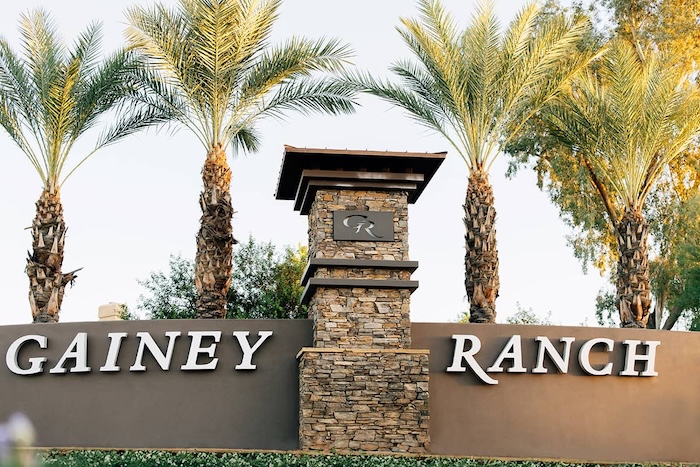
Gainey Ranch is one of Scottsdale’s most iconic communities and much of its identity is rooted in its landscape. Set on a former Arabian horse ranch, the community was master-planned from the start to feel like a living resort, and four decades later, the towering palms, lush green belts, and manicured golf fairways still deliver on that promise.
Mature date palms line the main roads and walking paths, while a curated mix of desert-adapted and tropical species can be found throughout the landscapes of residents.
It’s a neighborhood with a landscape worth taking care of.
Quick Downloads:
Gainey Ranch Plant Health Calendar
Timing guide to fertilization, weed treatment, overseeding, pest control and more.
Tree, & Shrub Watering Guide
Recommendations for when and how much to water, with adjustments for time of year
Tree Identification & Care Guide
Facts about each type of tree in the neighborhood and a guide to keeping them healthy
Gainey Ranch Landscape Care, Season By Season
By Cameron, ISA Certified Arborist, Adaptive Plant Health & Weed Solutions
Gainey Ranch’s resort-style landscape, towering date palms, Mediterranean fan palms, Aleppo pines, and desert accents like agave, dwarf oleander, and firesticks, faces a different set of pressures depending on the time of year. Monsoon storms and peak heat test the neighborhood’s tall palms and pines every summer, while pest and disease pressure on agaves, oleanders, and pines follows a predictable annual pattern. Because so much of the neighborhood’s identity comes from HOA-maintained green belts, golf cart paths, and common-area plantings alongside private yards, consistent care on both sides of the property line matters more here than in a typical subdivision. Here’s what to know and when to act, organized by issue and season, from the spring pest windows through winter frost protection.
Heat & Smart Watering Come First
Phoenix summers push temperatures well above 100 degrees for months at a time, and periodic water restrictions make efficient watering essential every year. Water deep and infrequent, soaking mature trees 24 to 36 inches down rather than running short, shallow daily cycles that keep roots near the hot surface. This matters most from May through September, but consistent deep watering year-round keeps roots resilient when the heat arrives. A single annual application of an organic mulch or biochar amendment around root zones (not piled against trunks) helps the soil hold moisture longer between waterings and buffers soil temperature swings, which is especially valuable in the reflected heat of paved cart paths and parking areas throughout the community.
Monsoon Storm Prep Is the Top Priority
Arizona’s monsoon season runs June 15 through September 30 every year, and microbursts and haboobs during this stretch can drop a mature palm or snap an Aleppo pine limb in seconds. Gainey Ranch’s tall specimens are the most exposed. Have high, heavy, or leaning trees structurally evaluated and thinned each spring, before monsoon season arrives. It’s the single highest-value action you can take annually. Palms in particular should have dead or drooping fronds removed on a regular schedule rather than left to build up weight and wind resistance in the crown, and any tree that has already developed a visible lean should be evaluated for cabling or bracing rather than waiting for the next storm to make the decision for you.
Date & Mediterranean Fan Palm Threats (Weevil + Fusarium)
The South American palm weevil is established in the region and is drawn to freshly pruned and wounded palms, while Fusarium wilt spreads on dirty pruning tools moving from an infected tree to a healthy one. Avoid heavy pruning during the hottest months, and only use crews that sterilize tools between trees. Watch for an uneven or one-sided crown, wilting of the newest (innermost) fronds first, or a foul odor near the crown, all early signs of weevil damage that are easy to miss from the ground. Report any palm with a collapsing or one-sided crown immediately, no matter the season, since Fusarium-infected date palms typically cannot be saved and should be removed to protect neighboring palms.
Aleppo Pine & Bark Beetles
Heat- and drought-stressed Aleppo pines are prime targets for Ips bark beetles, especially from May through September, and an infested pine usually can’t be saved. Keep pines deeply watered year-round, and watch for fading or browning needles, pitch tubes, and sawdust-like frass at the base or in bark crevices during the hottest months. Because Aleppo pines are frequently planted in rows or clusters along Gainey Ranch’s fairways and cart paths, beetles that successfully colonize one stressed tree can spread quickly to its neighbors. A declining pine should be removed and the wood chipped or hauled off-site promptly rather than left on the property, where beetles can continue to emerge and attack nearby trees.
Agave Snout Weevil (Active March Through June)
Agave snout weevils are typically active from March through June, when adults lay eggs at the base of large agaves and larvae tunnel into the core. By the time a plant wilts or folds inward, the damage is usually already fatal, and a soft, foul-smelling rot at the base (a secondary bacterial infection that follows the larval tunneling) often confirms the diagnosis. Larger, mature agave species common in Gainey Ranch’s xeriscape beds are more attractive to the weevil than smaller varieties, so treat your biggest, showiest specimens preventively each spring before symptoms appear, and remove any collapsing agave promptly to stop weevils from spreading to neighboring plants.
Oleander Leaf Scorch
Dwarf oleanders lining walls and common areas typically show leaf scorch symptoms worst during the hottest months, with edges browning inward and whole branches dying back, resembling drought stress that won’t respond to more water. The disease is caused by the bacterium Xylella fastidiosa, spread from plant to plant by small insects called sharpshooters, which is why it tends to show up in clusters along a shared wall or hedge line rather than in a single isolated shrub. There is no cure, so remove confirmed plants promptly, sanitize pruning tools between shrubs to avoid spreading it further, and consider replacing with Texas sage, yellow bells, or hop bush.
Firesticks: Toxic Sap and Frost Sensitivity
Firesticks (Euphorbia tirucalli) show up throughout Gainey Ranch as a striking accent in xeriscape beds, prized for the coral-orange color their stems take on in cool weather. The milky sap inside every stem is toxic and can cause painful skin and eye irritation, so any pruning or cleanup after storm damage should be done with gloves and eye protection, and cut stems should never be burned, since the smoke carries the irritant. Firesticks are also more frost-sensitive than most of the neighborhood’s desert plantings and can suffer visible dieback in a hard freeze, which is worth knowing before a cold snap catches a bed of them unprotected.
Fall Turf Transition On Common Areas and Golf-Adjacent Lawns
Where Gainey Ranch properties border the golf course or maintain overseeded common-area turf, fall is a working season, not a wind-down. Bermudagrass common areas typically get a contact-kill application in September to prepare for overseeding, followed by a soil amendment in October to support germination and a fertilizer application in November to feed the new winter grass. Skipping or delaying this sequence is one of the most common reasons a lawn comes in patchy or weedy through the winter months, so timing the transition to the calendar matters more than reacting to how the grass looks on a given week.
Winter Frost Protection For Palms and Firesticks
Phoenix-area frost is infrequent but not rare, and Gainey Ranch’s mix of tender and cold-sensitive plantings, young palms, firesticks, and other frost-tender accents, needs a plan before the first cold snap of the season rather than after. Cover vulnerable plants with breathable frost cloth (never plastic, which traps moisture against the foliage) on nights when temperatures are forecast near or below freezing, and remove it during the day so plants can get sunlight. Hold off on pruning frost-damaged growth until spring, since the damaged tissue actually helps insulate the healthy wood beneath it through the rest of the winter.
Gainey Ranch Homeowner Action Items
- Audit and adjust your irrigation each spring. Confirm water reaches the full root zone of mature trees and palms, switch to deep, infrequent watering, and check for clogged emitters before summer demand peaks.
- Storm-proof your big trees before monsoon season. Schedule structural thinning for tall palms and Aleppo pines each spring, ahead of monsoon season. This is the top annual safety priority.
- Protect your palms. Avoid heavy pruning during the hottest months, insist on tool sanitation, and ask about preventive trunk treatment for high-value date palms.
- Inspect agaves and oleanders each spring and summer. Check agave cores for softening from March through June, when snout weevils are active, and watch oleanders for margin-in browning during the hottest months. Remove or report anything in active decline.
- Handle firesticks with care. Wear gloves and eye protection when pruning or cleaning up storm-damaged stems, and never burn the trimmings, since the sap and smoke are both irritants.
- Stay on schedule with fall turf transition. If you have overseeded common-area or golf-adjacent turf, follow the September contact-kill, October soil amendment, and November fertilizer sequence rather than waiting to see how the lawn looks.
- Protect frost-tender plants before the first cold snap. Have breathable frost cloth ready for young palms, firesticks, and other tender plantings, and wait until spring to prune any frost damage.
- Book a seasonal health check. A walkthrough each spring or summer catches heat stress, beetle activity, and storm-risk limbs before they become emergencies.
Need some guidance?
If you have any questions about plant health or your landscape, feel free to give us a call at (602)777-7764 or fill out our contact form.
Anything from a quick question to a free 15-point landscape inspection, we’re here to help.