
Maple-Ash Plant Health Resource Center
Plant Health & Landscape Care For The Maple-Ash Neighborhood In Tempe, AZ
Updated Summer, 2026
A guide to Maple-Ash Plant Health
This page will teach you about the unique needs of your neighborhood and how to best care for your landscape.
Up-To-Date Information
We update this page as we see new trends, changes and threats like insects, diseases or plant stressors.
What to know about Maple-Ash Landscapes
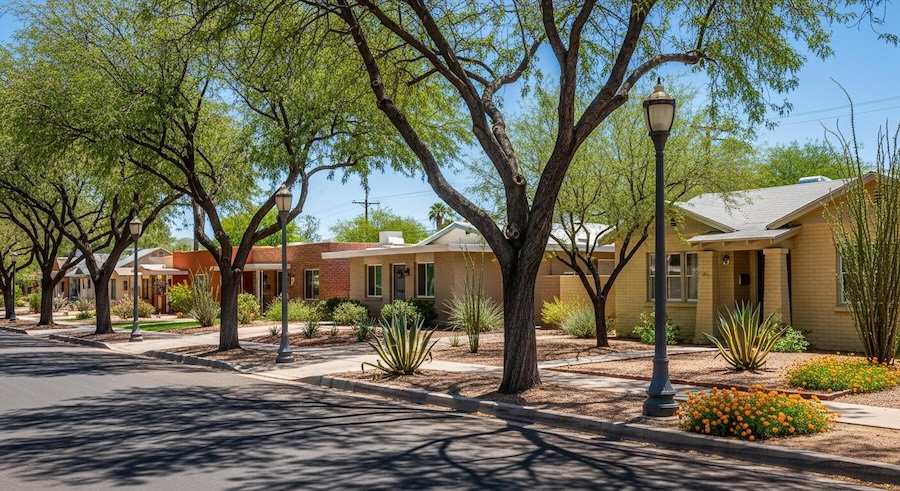
Maple-Ash is Tempe’s oldest neighborhood, a historic district of early-twentieth-century bungalows just south of the Mill Avenue district and west of ASU, with homes dating back to the 1910s. Generations of planting have produced a dense, multi-layered urban forest that gives the district its shaded, established character.
The canopy mixes Chinese elm, Arizona ash, and Southern live oak for broad, layered shade, underplanted with privet and myrtle hedges and flowering vines that climb walls and ramadas.
Protecting this landscape means understanding the specific needs of this aging, multi-layered urban forest, from monsoon-season structure over historic homes to right-sized irrigation in a drought climate.
Quick Downloads:
Maple-Ash Plant Health Calendar
Timing guide to fertilization, weed treatment, overseeding, pest control and more.
Tree, & Shrub Watering Guide
Recommendations for when and how much to water, with adjustments for time of year
Tree Identification & Care Guide
Facts about each type of tree in the neighborhood and a guide to keeping them healthy
The Current State Of Plant Health In Maple-Ash:
Updated by Cameron, ISA Certified Arborist, June 2026
Maple-Ash’s historic streets are shaded by a mature, multi-layered urban forest, and summer is when those old trees are tested hardest. We’re in peak heat with monsoon season active (June 15 through September 30), forecast hotter and wetter than normal, while the Valley stays in drought under Stage 2 water rules. Large ash and live oaks standing over century-old bungalows make storm safety and careful watering the headline issues. Here’s what to watch for right now.
Heat & Smart Watering Come First
Maple-Ash’s older, layered canopy includes higher-water trees like ash and live oak, and Stage 2 rules mean every gallon has to count. Water mature trees deep and to the full root zone rather than in frequent shallow cycles, and remember that the big shade trees here need more support through record heat than the desert-adapted plantings elsewhere in the Valley.
Monsoon Storm Prep Is the Top Priority
Large Arizona ash and Southern live oaks are the trees most likely to drop limbs in a monsoon microburst, and in Maple-Ash they often stand directly over historic, irreplaceable homes. Have big or aging trees structurally thinned and evaluated before the next storm, prioritizing limbs over rooflines and gathering areas. This is the single most valuable thing you can do this summer.
Southern Live Oak: Heat, Water & Acorns
Live oaks bring dense, beautiful shade but are higher-water trees that can show heat stress and iron chlorosis (yellowing between green veins) in our alkaline soils, and they drop heavy acorn litter. Keep them deeply watered and watch for chlorosis, and if acorn litter is a problem, plan a spring bloom-time suppression treatment, a service Adaptive provides for live oaks.
Arizona Ash & Borers
The neighborhood’s Arizona ash are reaching the stage where decline and boring insects go hand in hand, showing as upper-canopy dieback, bark splitting, and sawdust-like frass at the trunk base. Get declining ash assessed now to decide whether targeted care can extend their life or whether replacement planning should begin, especially for trees overhanging structures.
Chinese Elm: The Healthy Backbone
Chinese elms are generally the most robust of the big shade trees here and will carry the district’s canopy forward, so they are worth investing in. Keep them deeply watered, watch for elm leaf beetle activity in the heat, and monitor for Texas root rot, which spreads fastest in hot soils.
Privet, Myrtle & Flowering Vines: The Layered Understory
The understory of privet and myrtle hedges and flowering vines fills out the district’s layered look, but dense, shaded plantings trap heat and humidity. Watch privet and myrtle for scale and the sooty mold that follows it, keep vines thinned for airflow, and prune for light penetration so the lower layers stay healthy.
Summer Action Items For Maple-Ash Homeowners
- Storm-proof your big trees now. Schedule structural thinning for large ash and live oaks before the next monsoon push, prioritizing limbs over historic rooflines. This is the top safety priority.
- Care for your live oaks. Deep water, watch for iron chlorosis, and plan a spring acorn suppression treatment if litter is a problem.
- Evaluate aging ash. Look for upper-canopy dieback and frass, and get an arborist assessment before the heat deepens the decline.
- Invest in your Chinese elms. Deep water, watch for elm leaf beetle, and monitor for Texas root rot to protect the district’s healthiest shade trees.
- Book a summer health check. A walkthrough now catches storm-risk limbs, borer activity, and heat stress before they become emergencies.
Frequently Asked Questions About Maple-Ash Landscapes
What are the most common summer tree problems in Maple-Ash?
Maple-Ash’s historic urban forest of Chinese elm, Arizona ash, and Southern live oak faces several summer pressures. Large ash and live oaks carry the highest monsoon limb-failure risk over older homes, aging ash draw bark and flatheaded borers, live oaks show heat stress and iron chlorosis, and dense understory plantings build up scale. Adaptive’s ISA Certified Arborists assess these and recommend care before they become hazards.
How do I protect my Maple-Ash heritage trees during monsoon season?
Large Arizona ash and Southern live oaks are among the most storm-prone trees in the district, and they often overhang century-old, irreplaceable homes. The best protection is a professional structural thinning and evaluation before the next monsoon microburst, which reduces wind resistance and removes weak or dead limbs over rooflines and gathering areas. Adaptive can prioritize the highest-risk trees on your property.
Can I reduce the acorn litter from my live oak in Maple-Ash?
Yes. Southern live oaks drop heavy acorn litter that can be messy and labor-intensive to clean up, and the same growth-regulator approach used to suppress fruit on olives can suppress acorns on live oaks when applied at spring bloom. Summer is the time to monitor the tree and plan that treatment for next spring. Adaptive offers fruit and acorn suppression for live oaks and can assess your trees.
How should I water mature trees in a historic Maple-Ash yard during summer?
Maple-Ash’s big shade trees, especially ash and live oak, are higher-water than desert species and need deep, infrequent watering that reaches 24 to 36 inches into the soil, not frequent shallow cycles that keep roots near the hot surface. Older yards often have outdated or shallow irrigation, so it is worth confirming water actually reaches the full root zone. Adaptive can audit your irrigation under the current Stage 2 drought rules.
Need some guidance?
If you have any questions about plant health or your landscape, feel free to give us a call at (602)777-7764 or fill out our contact form.
Anything from a quick question to a free 15-point landscape inspection, we’re here to help.