
Marlborough Park Plant Health Resource Center
Customized for your neighborhood by Adaptive Plant Health & Weed Solutions
Updated Spring, 2026
A guide to Marlborough Park
Plant Health
This page will teach you about the unique needs of your neighborhood and how to best care for your landscape.
Up-To-Date Information
We update this page as we see new trends, changes and threats like insects, diseases or plant stressors.
What to know about Marlborough Park Landscapes
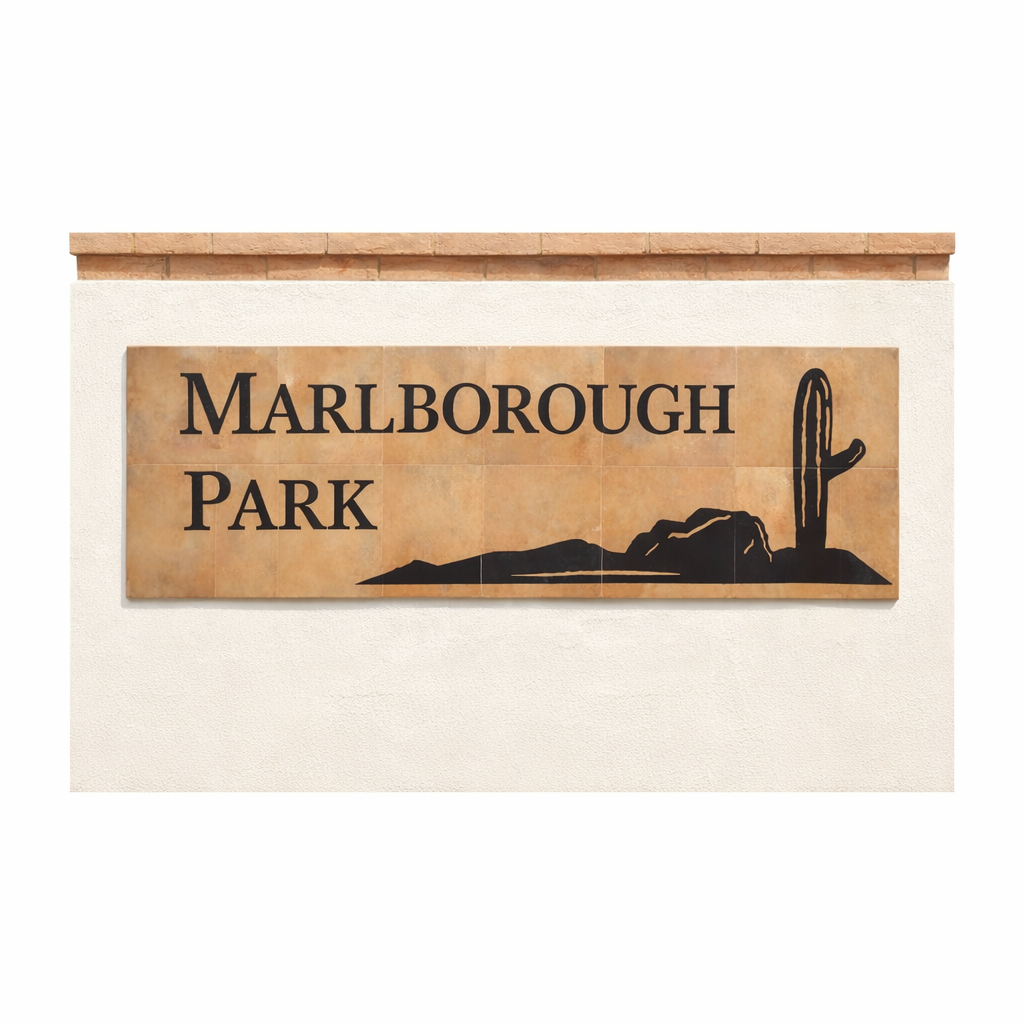
Marlborough Park is an established Tempe neighborhood built primarily in the 1970s and 1980s, featuring single-family homes on comfortable lots with mature landscapes that give the community a shaded, settled character.
The tree palette here represents a classic late-twentieth-century Valley mix: Eldarica (Mondell) pines were planted heavily for evergreen screening, eucalyptus for fast shade, and mulberry for dense summer canopy.
At ground level, Texas sage, jojoba, and creosote provide structure and drought tolerance.
Marlborough Park’s landscape is now 35 to 50 years old, and the pine and eucalyptus populations in particular are reaching a stage where decline, structural failure, and disease demand proactive attention from every homeowner.
Quick Downloads:
Marlborough Park Plant Health Calendar
Timing guide to fertilization, weed treatment, overseeding, pest control and more.
Tree, & Shrub Watering Guide
Recommendations for when and how much to water, with adjustments for time of year
Tree Identification & Care Guide
Facts about each type of tree in the neighborhood and a guide to keeping them healthy
The current state of Plant Health in Marlborough Park:
Updated by Cameron, ISA Certified Arborist
Marlborough Park’s canopy is defined by three species that are all presenting challenges as they age: Eldarica pine, eucalyptus, and mulberry. Each requires different management approaches, and understanding the specific risks associated with each species is critical for Marlborough Park homeowners making decisions about tree care, removal, and replacement in 2026.
Eldarica Pine: Aging Out of the Valley Climate
Eldarica pine (Pinus eldarica) was the screening tree of choice for Valley neighborhoods built in the 1970s and 1980s, and Marlborough Park has a substantial population. These pines are now 35 to 50 years old and increasingly showing the stress of decades in a climate that pushes the limits of their tolerance. Canopy thinning, needle yellowing, and bark beetle susceptibility are widespread. The Ips beetle complex attacks drought-stressed Eldarica pines preferentially, and once a tree is heavily infested, removal is typically the only option. Deep, infrequent irrigation and avoiding soil compaction are the best defenses for pines that are still healthy.
Eucalyptus: Limb Failure Risk in an Established Neighborhood
Eucalyptus species planted in Marlborough Park during the 1970s and 1980s have grown into massive trees with canopy spreads exceeding 40 feet. While impressive, these mature eucalyptus specimens pose the highest monsoon limb-failure risk of any tree species in the neighborhood. Eucalyptus naturally sheds limbs as part of its growth cycle, and the wood becomes increasingly brittle with age. Any homeowner with a mature eucalyptus near a structure, vehicle parking area, or gathering space should prioritize a professional structural evaluation and canopy thinning before monsoon season. This is the single highest-priority tree care action in Marlborough Park.
Mulberry: The Pollen Ban Legacy
The mature mulberry trees in Marlborough Park predate Phoenix’s Airborne Pollen Ordinance, which banned the sale and planting of male mulberry trees due to their extreme allergenic pollen output. These trees continue to produce massive pollen loads each spring, contributing to the Valley’s allergy burden, while simultaneously aging into susceptibility to sooty canker. Marlborough Park homeowners should weigh the shade value of their mulberry trees against the health, allergy, and disease risks, and develop a replacement timeline that phases in alternative shade species over the coming years.
Texas Sage, Jojoba, and Creosote: The Desert Foundation
The shrub layer in Marlborough Park is anchored by species that are far better adapted to the long-term climate than the canopy trees above them. Texas sage, jojoba, and creosote are all native or near-native species that thrive with minimal irrigation and rarely suffer from the pest and disease pressures that plague the overhead canopy. These plants will form the backbone of Marlborough Park’s landscape as aging pines, eucalyptus, and mulberry are gradually replaced with more sustainable species.
Spring Action Items for Marlborough Park Homeowners
- Evaluate Eldarica pines for bark beetle activity and decline. Check for bore holes, pitch tubes, and overall crown color. Pines in active decline should be assessed for removal before they become a falling hazard or beetle reservoir for neighboring trees.
- Schedule eucalyptus structural thinning before monsoon season. This is the highest-priority safety action in Marlborough Park. Reduce canopy density and shorten overextended limbs to minimize wind resistance.
- Assess mulberry trees for sooty canker. Dark, sunken bark lesions that crack to reveal black spore masses indicate active infection. Avoid pruning mulberry during the hot months, and plan for replacement if the main trunk is infected.
- Maintain Texas sage and jojoba on low-water irrigation. Ensure these desert-adapted shrubs are not overwatered by being on the same zone as turf or high-water plantings. Overwatering is the primary cause of decline in these species.
- Begin developing a shade-tree succession plan. As pines, eucalyptus, and mulberry trees decline and are removed, replacement species like desert museum palo verde, Chilean mesquite, or Chinese pistache offer better long-term performance in the Valley climate.
Need some guidance?
If you have any questions about plant health or your landscape, feel free to give us a call at (602)777-7764 or fill out our contact form.
Anything from a quick question to a free 15-point landscape inspection, we’re here to help.