
Marlborough Park Plant Health Resource Center
Customized for your neighborhood by Adaptive Plant Health & Weed Solutions
Updated Summer, 2026
A guide to Marlborough Park
Plant Health
This page will teach you about the unique needs of your neighborhood and how to best care for your landscape.
Up-To-Date Information
We update this page as we see new trends, changes and threats like insects, diseases or plant stressors.
What to know about Marlborough Park Landscapes
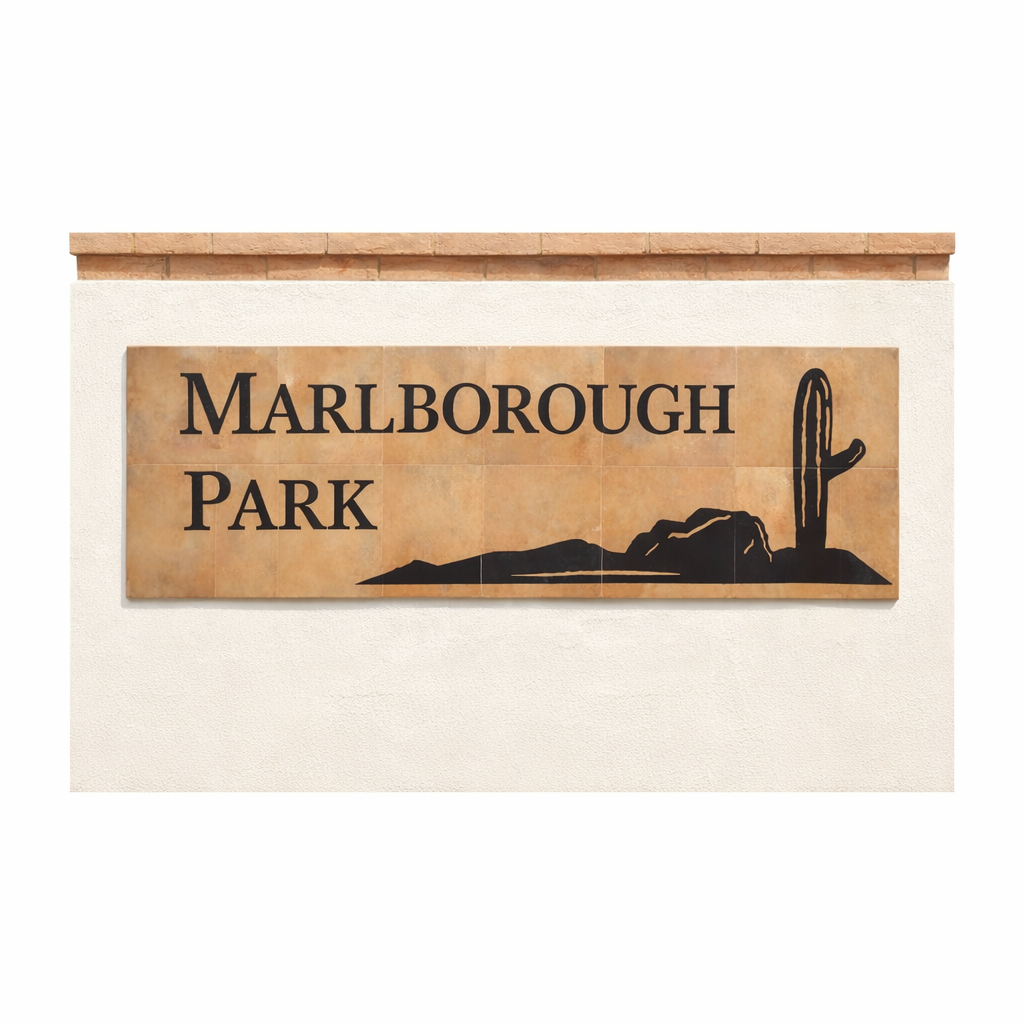
Marlborough Park is an established Tempe neighborhood built primarily in the 1970s and 1980s, featuring single-family homes on comfortable lots with mature landscapes that give the community a shaded, settled character.
The tree palette here represents a classic late-twentieth-century Valley mix: Eldarica (Mondell) pines were planted heavily for evergreen screening, eucalyptus for fast shade, and mulberry for dense summer canopy.
At ground level, Texas sage, jojoba, and creosote provide structure and drought tolerance.
Marlborough Park’s landscape is now 35 to 50 years old, and the pine and eucalyptus populations in particular are reaching a stage where decline, structural failure, and disease demand proactive attention from every homeowner.
Quick Downloads:
Marlborough Park Plant Health Calendar
Timing guide to fertilization, weed treatment, overseeding, pest control and more.
Tree, & Shrub Watering Guide
Recommendations for when and how much to water, with adjustments for time of year
Tree Identification & Care Guide
Facts about each type of tree in the neighborhood and a guide to keeping them healthy
The Current State Of Plant Health In Marlborough Park:
Updated by Cameron, ISA Certified Arborist, June 2026
Marlborough Park’s aging canopy faces its biggest risks in summer. We’re in peak heat with monsoon season active (June 15 through September 30), forecast hotter and wetter than normal, while the Valley stays in drought under Stage 2 water rules. The neighborhood’s three signature trees, Eldarica pine, eucalyptus, and mulberry, each need a different summer game plan, and the storm season raises the stakes. Here’s what to focus on now.
Heat & Smart Watering Come First
High heat and warm overnight lows stress the canopy, and drought rules mean watering has to be efficient. Water mature trees deep and infrequent to the full root zone, and keep desert-adapted shrubs off high-water and turf zones where overwatering does the most harm.
Monsoon Storm Prep Is the Top Priority
Mature eucalyptus pose the highest monsoon limb-failure risk of any tree in the neighborhood, and aging Eldarica pines are close behind. Any large eucalyptus or pine near a home, driveway, or gathering space should get a structural evaluation and canopy thinning before the next storm. This is the single highest-priority action in Marlborough Park.
Eldarica Pine & Ips Bark Beetle
Decades of Valley heat have pushed these pines to their limits, and summer drought stress makes them prime targets for Ips bark beetles, which a heavily infested pine rarely survives. Keep healthy pines deeply watered and avoid soil compaction, and watch for fading needles, pitch tubes, and sawdust-like frass.
Eucalyptus Pests & Limb Failure
Beyond the storm risk, drought-stressed eucalyptus draw red gum lerp psyllid and longhorned borers, which feed beneath the bark on weakened trees. Keep them deeply irrigated, avoid unnecessary pruning wounds, and watch for weeping sap and branches that drop their leaves while the rest of the tree looks fine.
Mulberry & Sooty Canker
Aging mulberries are increasingly susceptible to sooty canker, which shows as dark, sunken bark lesions that crack to reveal black spore masses. Avoid pruning mulberry during the hot months, since wounds invite infection, and plan for replacement if the main trunk is affected.
Texas Sage, Jojoba & Creosote
These native and near-native shrubs are the most climate-suited plants in the neighborhood and rarely suffer the pests that plague the canopy above. Keep them on low water, since overwatering is the main cause of decline, and lean on them as the backbone of the landscape as aging trees are replaced.
Summer Action Items For Marlborough Park Homeowners
- Storm-proof eucalyptus and pines now. Schedule structural thinning before the next monsoon push. This is the highest-priority safety action in the neighborhood.
- Check Eldarica pines for beetle activity. Look for pitch tubes, frass, and fading crown color, and have declining pines assessed before they become a hazard or beetle source.
- Deep-water the canopy, low-water the shrubs. Reach the full root zone of mature trees, and keep Texas sage and jojoba off high-water zones.
- Hold off on mulberry pruning. Avoid hot-season cuts, watch for sooty canker lesions, and plan replacement if the trunk is infected.
- Start a shade-tree succession plan. As pines, eucalyptus, and mulberry decline, phase in better-adapted species like desert museum palo verde, Chilean mesquite, or Chinese pistache.
Need some guidance?
If you have any questions about plant health or your landscape, feel free to give us a call at (602)777-7764 or fill out our contact form.
Anything from a quick question to a free 15-point landscape inspection, we’re here to help.