
Summer Weeds in Phoenix: How to Identify and Control Nutgrass, Spurge, and Other Warm-Season Invaders
Just when you thought the pre-emergent you applied in the spring had everything under control, a new wave of weeds shows up. Summer in the Phoenix metro area brings its own set of aggressive weed species that thrive in extreme heat and many of them are completely unaffected by the pre-emergent herbicides that work in the cooler months.
If you are seeing unfamiliar weeds popping up in your lawn, rock landscape, or garden beds between May and September, you are likely dealing with warm-season species that require a different strategy. In this guide, we identify the most common summer weeds across Tempe, Chandler, Gilbert, Mesa, and Scottsdale, explain why they are so hard to control, and walk you through what actually works.
Why Summer Weeds Are Different
Most Phoenix homeowners are familiar with cool-season weeds like spurge nettle, London rocket, and Mediterranean grass that emerge during the mild winter and spring months. Pre-emergent herbicides applied in late September and again in February create a chemical barrier in the soil that prevents these seeds from germinating successfully.
Summer weeds are different in that many of them germinate when soil temperatures rise above 75 to 80 degrees, which is well after the spring pre-emergent barrier has broken down. Others, like nutsedge, are not even seed-based. They spread through underground tubers and rhizomes that pre-emergents cannot touch.
Nutgrass (Nutsedge)
If there is one summer weed that generates more frustration than any other in the Valley, it is nutgrass, which is actually a sedge called nutsedge (Cyperus rotundus or Cyperus esculentus). It thrives in the heat, loves overwatered lawns and is notoriously difficult to eliminate.
How to Identify Nutsedge
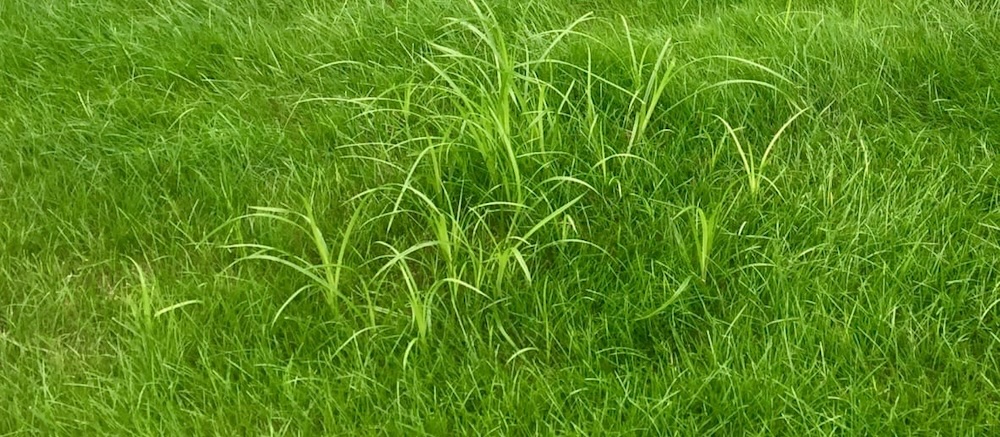
Nutsedge looks like grass at first glance, which is why many people do not realize they have a problem until it has spread. Here is how to tell it apart from your lawn:
Growth rate: Nutsedge grows faster than bermudagrass. Within a day or two after mowing, you will notice bright green blades standing noticeably taller than the surrounding turf.
Leaf arrangement: Look down at the stem from directly above. Nutsedge leaves radiate out in three directions, forming a triangular pattern. Grass blades emerge in pairs from opposite sides. The old saying “sedges have edges” refers to the triangular cross-section of the stem, which you can feel by rolling it between your fingers.
Color: Nutsedge is typically a lighter, more yellow-green than bermudagrass, making it stand out visually in an established lawn.
Texture: The leaves are stiffer and more upright than grass blades, with a prominent center ridge.
Why Nutsedge Is So Hard to Kill
Nutsedge survives through underground tubers called nutlets. A single plant can produce hundreds of nutlets in a season, each capable of remaining dormant in the soil for years. Pulling the plant out by hand often just breaks the stem and leaves the nutlets behind to produce new plants.
Standard broadleaf herbicides do not work on nutsedge because it is not a broadleaf weed. Standard grass herbicides will kill it but will also kill your lawn. You need a selective herbicide specifically formulated for sedge control.
Effective Control Methods
Selective herbicides: Products containing halosulfuron-methyl (SedgeHammer) or sulfentrazone (Dismiss) are effective against nutsedge in bermudagrass lawns. These products target sedges without harming warm-season turfgrass. Follow label rates carefully and plan on at least two applications spaced 6 to 10 weeks apart, since the first application may not reach all underground nutlets.
Reduce overwatering: Nutsedge thrives in consistently wet soil. If you see nutsedge taking over a specific area, that area is probably being overwatered. Adjusting your irrigation schedule to allow the soil to dry between waterings makes the environment less hospitable.
Do not pull it. Pulling nutsedge stimulates the underground network to produce more shoots. If you must remove it by hand, use a small trowel to dig out the entire root system and attached nutlets, going at least six inches deep.
Spotted Spurge
Spotted spurge (Euphorbia maculata) is a low-growing, mat-forming annual weed that appears across Phoenix landscapes once temperatures climb above 100 degrees. It thrives in sidewalk cracks, rock mulch, lawn edges, and anywhere else it can find a foothold.
How to Identify Spurge
Growth: Spurge grows flat along the ground in a spreading, mat-like pattern. A single plant can cover a circle two feet in diameter within weeks.
Leaves: Small, oval leaves arranged in pairs along reddish stems. Many species have a dark reddish-brown spot or blotch in the center of each leaf, which is how spotted spurge gets its name.
Milky sap: Break a stem and you will see white, milky latex ooze from the break. This is the definitive identification feature and is also a skin irritant for some people, so wear gloves when handling spurge.
Seed production: Spurge is an incredibly strong seed producer. A single plant can generate thousands of seeds in its lifetime, which is why small patches become large infestations quickly.
Control Methods for Spurge
Pre-emergent timing: Spurge is a summer annual, meaning it germinates from seed each year. A pre-emergent herbicide applied in mid-to-late April, when soil temperatures reach 75 degrees, prevents germination. This is separate from the fall and February pre-emergent applications that target cool-season weeds.
Post-emergent herbicides: For spurge that is already growing, broadleaf herbicides containing 2,4-D, dicamba, or triclopyr are effective. In bermudagrass lawns, combination products like Trimec work well. In rock or bare-ground landscapes, a non-selective herbicide can be used with careful spot application.
Hand pulling: Because spurge is an annual with a shallow taproot, hand pulling is effective if you catch it early and get the entire root. Pull before the plant sets seed, or you are just planting next year’s crop.
Mulch: In landscape beds, maintaining a three-inch layer of rock or organic mulch significantly reduces spurge germination by blocking light from reaching the soil surface.
Puncturevine (Goathead)
Puncturevine (Tribulus terrestris) is another summer annual that thrives in Phoenix heat. It is best known for its spiny seed pods, called goatheads, that puncture bike tires, shoes, bare feet and more.
Puncturevine grows as a low, spreading vine with small compound leaves arranged in pairs. It produces small yellow flowers followed by hard, spiny seed pods that break into five wedge-shaped segments, each armed with two sharp spines. The vines can extend several feet from a central taproot.
Remove plants by hand or hoe before they flower and set seed. Once the goathead seed pods form, the damage is done since those spines will persist in the soil for years. Pre-emergent herbicides applied in late spring are effective for prevention. For established patches, post-emergent broadleaf herbicides will kill the plant, but you still need to clean up any seed pods that have already formed.
Bermudagrass in Rock Landscapes
While bermudagrass is desirable in lawns, it becomes a serious weed problem when it invades rock landscapes, flower beds, and hardscape areas. Summer heat supercharges bermudagrass growth, and its aggressive stolons and rhizomes can travel several feet underground to pop up in unwanted areas.
Selective herbicides: Grass-selective herbicides (graminicides) like fluazifop or sethoxydim can kill bermudagrass without harming broadleaf landscape plants. This is the targeted approach when bermudagrass has invaded shrub beds or flower gardens.
Glyphosate: In areas with no desirable plants, a non-selective herbicide will kill bermudagrass on contact. However, it does not prevent regrowth from underground rhizomes, so multiple applications are usually necessary.
Physical barriers: Heavy-duty landscape fabric or root barriers installed along the edge between lawn and rock areas can slow bermudagrass invasion, though determined stolons will eventually find a way over or around most barriers.
Building a Summer Weed Prevention Plan
The most effective approach to summer weeds combines prevention, early detection, and targeted treatment.
April pre-emergent: Apply a pre-emergent herbicide specifically timed for summer annual weeds when soil temperatures reach 75 degrees, typically mid-to-late April in the Phoenix area. Products containing prodiamine or dithiopyr provide the broadest spectrum of summer annual control.
Irrigation management: Overwatering is the single biggest contributor to summer weed problems. Water deeply and infrequently rather than running short daily cycles. This discourages shallow-rooted weeds and nutsedge while keeping your landscape plants healthy.
Mulch maintenance: Whether you use rock or organic mulch, maintain adequate depth. Three inches of rock mulch or two to three inches of organic mulch significantly reduces weed seed germination.
Monthly monitoring: Walk your property at least once a month during summer and address new weeds before they flower and set seed. One spurge plant pulled in June prevents thousands of seeds from entering your soil.
Professional treatment: For persistent problems like nutsedge infestations or large-scale spurge coverage, professional weed control services can apply products and techniques that are more effective than retail options. At Adaptive Plant Health & Weed Solutions, we design weed management programs tailored to your specific landscape and weed pressure.
Frequently Asked Questions
Why are weeds growing even though I applied pre-emergent?
Pre-emergent herbicides applied in fall and February target cool-season winter weeds. Summer weeds like spurge and puncturevine germinate later when soil temperatures rise above 75 degrees, often after the spring pre-emergent has broken down. A separate application in mid-to-late April is needed for summer weed prevention. Nutsedge is not controlled by pre-emergents at all because it spreads through underground tubers rather than seeds.
Is nutgrass the same as nutsedge?
Yes. Nutgrass is the common name for nutsedge (Cyperus species). Despite its grass-like appearance, it is actually a sedge, not a true grass. This distinction matters because herbicides that target grasses or broadleaf weeds are ineffective against sedges. You need a sedge-specific herbicide like halosulfuron-methyl for control.
Will pulling weeds in summer spread them?
It depends on the weed. Pulling spurge and puncturevine is effective if you get the entire root and pull before seed set. However, pulling nutsedge almost always makes the problem worse because it breaks the stem and stimulates underground nutlets to produce additional shoots. For nutsedge, chemical control is the more effective approach.
How do I tell the difference between nutsedge and regular grass?
Look at the leaf arrangement from above. Nutsedge leaves radiate in three directions forming a triangle, while grass blades emerge from opposite sides of the stem. Nutsedge also grows faster than bermudagrass, appearing noticeably taller within a day or two after mowing. The stem has a triangular cross-section you can feel by rolling it between your fingers, and the color is typically a lighter yellow-green compared to bermudagrass.
When is the best time to treat summer weeds in Phoenix?
Treat summer weeds as early as possible after they emerge, ideally before they flower and produce seeds. For spurge, treatment is most effective when plants are young and actively growing, typically June through August. For nutsedge, the best treatment window is when plants are young and have fewer than five leaves, usually late May through July. Puncturevine should be removed or treated before the spiny seed pods form.