
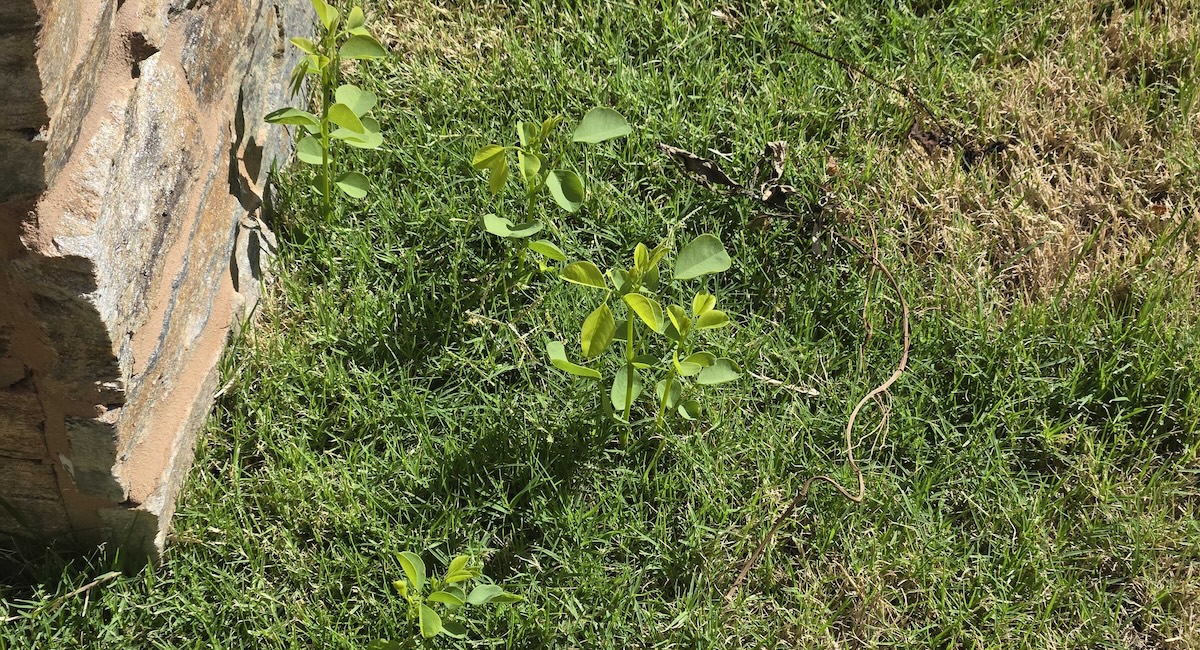
Why Your Weed Control Isn’t Working (And What to Do Instead)
You’ve tried everything. You’ve sprayed herbicides when you saw the first weeds popping up. You’ve bought products promising quick results. You’ve pulled weeds by hand until your back ached. And yet, the weeds keep coming back, sometimes seeming to multiply despite your efforts. Frustration sets in as you watch your neighbors’ properties looking pristine while yours looks like a neglected lot.
The good news is that you’re not alone in this struggle, and the problem isn’t usually a lack of effort on your part. The bad news is that most DIY weed control approaches fail not because you’re doing something wrong, but because they’re fundamentally incomplete. They address symptoms rather than root causes. They rely on reactive treatment rather than preventative systems. And they ignore the unique realities of Phoenix’s climate and soil conditions.
Understanding why your weed control isn’t working is the first step toward adopting a strategy that actually does work. This guide will help you identify what’s going wrong with your current approach and explain why professional weed control succeeds where DIY efforts typically fail.
The Fundamental Problem: Reactive Rather Than Preventative
The primary reason most weed control efforts fail is that they’re reactive. You see weeds, you kill them. Weeds come back, you kill them again. This cycle repeats endlessly because you’re never getting ahead of the problem. You’re always chasing what’s already there rather than preventing what’s about to be there.
The Phoenix environment makes this reactive approach even worse. Our desert climate creates two distinct weed germination seasons: summer weeds and winter weeds. If you’re not applying preventative measures during the specific windows when those seeds are germinating, you’ve lost the battle before it even began. By the time you see a weed and decide to spray, that plant has already established itself, developed roots, and become exponentially harder to kill.
Proper weed control isn’t primarily about killing existing weeds, though that’s certainly part of it. Proper weed control is about preventing weeds from germinating and establishing in the first place. It’s about creating conditions in your landscape where weed seeds can’t survive, and where the few weeds that do manage to germinate are quickly controlled before they become problems.
Most homeowners never implement this preventative system. They wait for visible problems and then react. By switching to a preventative approach, your weed problems diminish dramatically. But executing this approach requires understanding Phoenix’s specific timing and conditions, which brings us to the second major reason weed control fails.
Reason #1: Wrong Timing in Phoenix’s Dual Growing Season
Phoenix presents a timing challenge that many homeowners don’t fully appreciate. We don’t have one weed season like temperate climates do. We have two distinct seasons, each with different weeds that germinate at different times.
Summer annual weeds like crabgrass, sandbur, and goosegrass germinate in spring when soil temperatures warm to about 50°F. This happens in Phoenix roughly from late February through March. If you don’t have pre-emergent herbicide in place before this window, you’ve missed the opportunity to prevent these weeds from germinating at all. By April, when many homeowners finally start thinking about weed control, crabgrass seeds have already sprouted and established themselves.
Winter annual weeds like chickweed, filaree, and annual bluegrass germinate in fall when soil temperatures cool. This happens in Phoenix roughly from September through October. Many homeowners don’t apply any pre-emergent during this window, completely missing the chance to prevent an entire season of weeds. Then they’re surprised when their landscaped beds are full of winter weeds come spring.
The timing challenge is further complicated by the fact that soil temperature, not calendar date, is what matters. You could have a warm winter where germination windows shift earlier or later. You need to monitor conditions rather than simply following a calendar. Most DIY homeowners don’t do this. They apply weed control whenever they think of it, missing the critical germination windows entirely.
Without proper timing aligned to Phoenix’s specific conditions and weed germination windows, you’re fundamentally fighting a losing battle. Weeds are germinating before you even start treating them.
Reason #2: Wrong Product for the Problem
Herbicides aren’t interchangeable. Different products kill different weeds, work in different ways, and are appropriate for different situations. Using the wrong product against the wrong weed is like bringing a knife to a gunfight. You might make some impact, but you’re not going to win.
Consider crabgrass. Many homeowners spray crabgrass with a general-purpose herbicide they grab from the garden center. They’re disappointed when the crabgrass barely slows down. The problem is often that general-purpose products aren’t highly effective against crabgrass. Crabgrass needs specific herbicide chemistry to be controlled effectively. Using the wrong product means wasting money and time while the weeds thrive.
The same principle applies to other weeds. Winter weeds have different physiology than summer weeds and respond to different herbicides. Perennial weeds that have established root systems need different treatment strategies than annual weeds. Broadleaf weeds need different products than grassy weeds.
Many homeowners make do with whatever herbicide they can find, using a generic approach rather than targeting specific weed problems. This is why their weed control fails. They’re not using the right tool for the specific job.
Additionally, many DIY herbicides available to homeowners are dilute formulations. Professional-grade products are often significantly more concentrated and effective. A homeowner using a hardware store herbicide is starting with a disadvantage against a professional using properly formulated products.
Reason #3: Improper Application Technique
Even with the right product applied at the right time, improper application technique can result in failure. Herbicides work only when applied correctly, and there are many ways to apply them incorrectly.
Coverage is one issue. Many homeowners don’t realize that pre-emergent herbicides must be watered into the soil to be activated. Without water, the product just sits on top and provides no protection. Similarly, post-emergent herbicides must thoroughly cover the target weeds. Half-hearted spraying that misses areas or doesn’t adequately saturate the weeds results in incomplete control.
Application timing is also important. Post-emergent herbicides are most effective on young, actively growing weeds. Spraying established, mature weeds is less effective. Many homeowners wait too long, allowing weeds to harden off and become resistant to herbicide treatment. By the time they decide to spray, the weeds are much harder to kill.
Water quality and temperature affect herbicide effectiveness too. Cold temperatures slow herbicide uptake and reduce effectiveness. Poor water quality can interfere with herbicide absorption. Spray equipment condition matters. Clogged nozzles or improper pressure settings result in poor coverage or ineffective droplet size.
These application details might seem minor, but they make the difference between successful weed control and failure. Most homeowners don’t pay attention to them because they’re not obvious. You spray the weeds and wait to see what happens. When nothing happens, you don’t realize that improper application technique was the culprit.
Reason #4: Not Addressing Soil Conditions
Weeds don’t just appear randomly. They establish in soil conditions that either are poor for desirable plants or actively favor weed growth. If you’re not addressing the underlying soil conditions, weeds will keep coming back because you haven’t eliminated the conditions that favor them.
Compacted soil, poor drainage, nutrient deficiencies, and pH imbalances all favor weed growth and inhibit desirable plant growth. A landscape with healthy soil, proper drainage, and balanced nutrients becomes resistant to weed problems. Desirable plants thrive, and the dense vegetation crowds out space where weeds can establish.
Most DIY weed control ignores this fundamental principle. Homeowners focus on killing existing weeds without ever addressing why the weeds established in the first place. So when the weeds are gone, the soil conditions that enabled them are still there. The weeds come back because the environment still favors them.
Professional weed control often includes soil testing, analysis of drainage patterns and amendments or adjustments to soil conditions. This creates an environment where weeds struggle to establish while desirable plants thrive. It’s a more complete solution than simply killing visible weeds.
Reason #5: Skipping Pre-Emergent Application
Pre-emergent herbicides are arguably the most important tool in comprehensive weed management, and many homeowners skip them entirely. They either don’t understand the concept, don’t know when to apply it, or view it as an unnecessary expense.
Skipping pre-emergent is a critical mistake. Pre-emergent prevents weed seeds from germinating in the first place. It’s exponentially more effective than trying to kill weeds after they’ve established. A weed that never germinates doesn’t exist. A pre-emergent barrier costs far less and requires far less effort than repeatedly spraying post-emergent herbicides throughout the season.
The problem is that pre-emergent benefits are invisible. You don’t see weeds that didn’t germinate. You can’t know you’re being successful because you’re preventing a problem you would have had. Many homeowners, without understanding this principle, conclude that pre-emergent isn’t necessary because they don’t see an obvious problem when they use it.
But compare this to a landscape without pre-emergent. By mid-spring, it’s full of emerging weeds. By summer, it’s a battle to control the population. The homeowner is spraying every few weeks, frustrated by the endless cycle. Meanwhile, a property with proper pre-emergent application maintains a mostly clean landscape with minimal effort.
Professional weed control services consistently apply pre-emergent during the appropriate seasonal windows. This is a cornerstone of why professional service works so much better than DIY approaches.
Reason #6: Using the Same Product Repeatedly
Here’s a principle that’s true for all herbicides: weed populations eventually develop resistance to products that are used repeatedly on the same site. If you’re using the same herbicide repeatedly, season after season, some weed populations in your landscape will eventually become resistant to it. Then that product stops working, and you’re puzzled about why weed control is failing.
This problem compounds if you’re using only one or two herbicide products. You’re selecting for resistant weed populations, and over time, your only-partially-effective products become completely ineffective against those resistant populations.
Professional weed control services rotate herbicides and use different chemistry in different seasons to avoid this resistance development. They might use one product in spring, a different active ingredient in summer, and another in fall. This rotation prevents resistance from developing and maintains consistent control.
Most homeowners don’t think about resistance or rotation. They use whatever works somewhat, and then are bewildered when it gradually becomes less and less effective over several years.
The Science Behind Why Professional Weed Control Works
Professional weed control succeeds where DIY approaches fail for several key reasons that all relate to science and systematic approach rather than guesswork.
First, professional services are built on diagnosis. Before any treatment is applied, trained specialists evaluate the landscape, identify which weeds are present, understand their life cycles and optimal control windows, and determine what conditions are favoring their establishment. Treatment is based on specific knowledge of what weeds you have and when to control them.
Second, professional services use custom approaches rather than one-size-fits-all solutions. Different properties have different weed populations, different soil conditions, and different site characteristics. Professional services adapt their approach to your specific situation rather than applying the same treatment to every landscape.
Third, professional services employ equipment and products that aren’t available to homeowners. Professional-grade herbicides are more concentrated and effective. Professional application equipment ensures proper coverage and activation. The combination of better products and better equipment makes professional application inherently more effective.
Fourth, professional services provide ongoing monitoring and adjustment. They don’t just spray once and call it done. They observe how plants respond, monitor for emerging problems, adjust treatment strategies based on results, and continue managing weeds throughout the season. This adaptive approach catches problems early before they become significant.
Finally, professional services maintain consistent, year-round management. They apply pre-emergent at the right windows, monitor soil conditions, adjust site management practices to reduce weed pressure, and integrate multiple control strategies. This consistency and comprehensiveness is almost impossible for homeowners to achieve on their own.
When DIY Might Work
To be fair, DIY weed control can work for some situations. If you have a small property with minimal weed pressure, are willing to invest significant time and effort, understand your local weed species and Phoenix timing requirements, and can apply herbicides properly with attention to detail, you might achieve reasonable results.
However, most homeowners lack either the knowledge, the equipment, the time, or the dedication to execute DIY weed control effectively long-term. The effort and cost eventually exceed what they would spend on professional service, particularly when you factor in the frustration of continuous failure.
The real question isn’t whether DIY or professional is cheaper. It’s whether you’d rather spend significant time and effort on a strategy that provides mediocre results, or hire professionals who deliver consistently excellent results and free up your time and energy for other priorities.
Making the Switch to Professional Weed Control
If your DIY weed control efforts have been unsuccessful, professional service from a qualified provider like Adaptive Plant Health & Weed Solutions can transform your landscape. Our approach combines expert diagnosis, proper timing for Phoenix’s unique conditions, quality products and equipment, and consistent monitoring and adjustment.
We don’t just spray herbicides. We evaluate what’s causing your weed problems, develop a customized strategy to address those causes, implement that strategy with professional skill and equipment, and maintain ongoing management to keep your landscape weed-free.
The result is a landscape where weeds are controlled effectively, your property looks better, and you’re not constantly battling an endless weed problem. For most properties, this is worth the investment many times over.
Frequently Asked Questions About Failed Weed Control
If my weed control isn’t working, is the product defective?
Rarely. Most failures are due to timing, application technique, wrong product choice, or not addressing underlying causes. The product itself is usually fine; it’s just being used incorrectly or in the wrong situation.
How long does it take to see results from professional weed control?
This depends on what weeds you have and what stage they’re in. Pre-emergent application prevents future germination, so benefits appear over weeks and months as you’d normally see new weeds but don’t. Post-emergent herbicides show results within days to weeks depending on the product and conditions. Professional management shows dramatic improvements within the first growing season.
Will professional weed control work on my existing weeds?
Professional services will control existing weeds through post-emergent application, but the primary value of professional service is in preventing future weeds through pre-emergent application and addressing underlying conditions. Existing weeds are controlled, but the real benefit is the prevention system put in place.
Is professional weed control safe for my children and pets?
Professional herbicides, when applied by properly trained and licensed technicians, are safe when used according to label directions. Licensed Spray Technicians follow strict protocols to minimize risk. Adaptive’s QP Licensed Spray Technicians can explain safety measures and recommend precautions specific to your household.
Why does professional weed control cost more than DIY?
Professional service costs more upfront but provides better results, saves your time and effort, and often costs less over time when you factor in the value of your time and the reduced frustration. You’re paying for expertise, quality products, proper equipment, and consistent management are all things that deliver superior results.
How often do I need professional weed control service?
This depends on your property and your goals. Many properties benefit from spring pre-emergent application and fall pre-emergent application, with periodic post-emergent treatment as needed. A professional can recommend a management plan specific to your situation.
Can I switch to professional service mid-season if my DIY approach has failed?
Absolutely. Professional services can be implemented at any time. However, early intervention is more effective, particularly for pre-emergent application. If you’ve already missed the spring pre-emergent window, professional service can still provide post-emergent control of existing weeds and prepare the landscape for proper management going forward.
By the Adaptive PHS Team | ISA Certified Arborists & Plant Health Experts
Stop fighting a losing battle with weed control. Contact Adaptive Plant Health & Weed Solutions to learn how professional weed management can transform your Phoenix property. Our QP Licensed Spray Technicians provide expert diagnosis, custom strategies, and consistent results.
Related Resources: