
Winter Pruning and Desert Mistletoe: What to Cut, What to Wait On
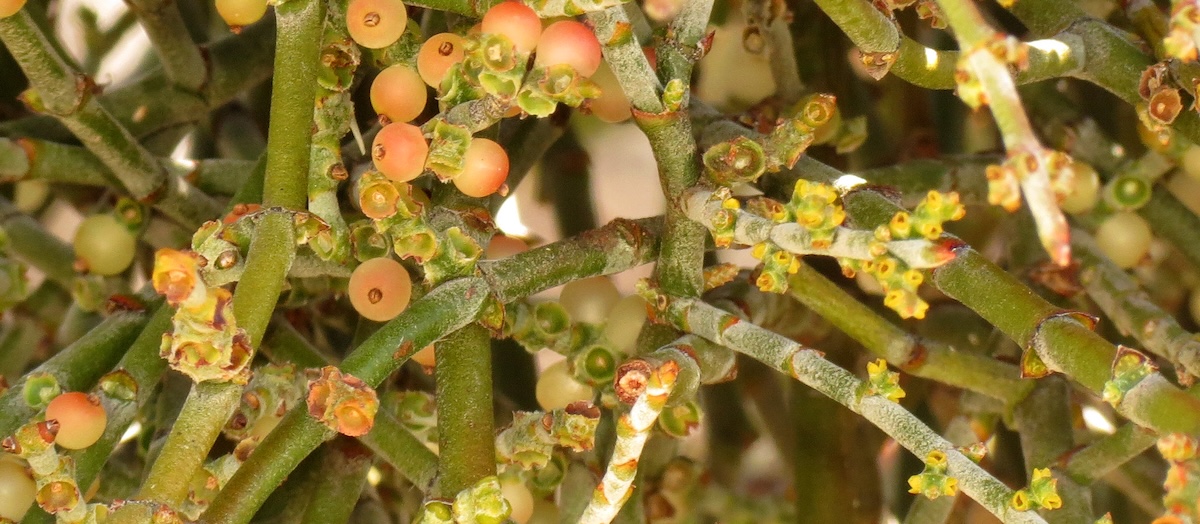
As it transitions into winter, this is when Phoenix-area trees show you what they have been hiding. Trees drop their leaves and the structure of the canopy becomes visible. That is also when desert mistletoe stands out: dense green clumps in bare mesquite, palo verde, and ironwood branches, sometimes with pale berries.
This is the perfect time to take a look at your trees and do some pruning if necessary. This guide explains the difference, and how to deal with mistletoe before it weakens a tree.
Why Winter Is a Good Time to Look at trees
Bare branches make three problems easy to see:
- Mistletoe. Evergreen clumps that stand out against leafless branches.
- Structure. Crossing branches, heavy limbs, weak attachments, and branches rubbing the roof or wall are more clear when leaves fall.
- Dead wood. Branches that do not leaf out in spring are hard to identify in summer, but easier to see when you compare them to the rest of the canopy in winter.
A walk around each tree in December or January takes ten minutes and tells you what care your tree may need.
What Is Desert Mistletoe?
Desert mistletoe (Phoradendron californicum) is a parasitic plant that attaches to the branches of host trees and takes water and nutrients from them. In the Valley, the usual hosts are mesquite, palo verde, ironwood, and acacia. The plant is spread by birds, which eat the berries and leave the seeds on branches.
Mistletoe is often present in a tree for years without obvious harm. The concern is a heavy infestation, particularly on a tree that is already stressed by drought, heat, or poor care. Heavily infested branches can decline and die back, and a tree that is struggling for other reasons has less capacity to carry the load.
How to Remove Mistletoe the Right Way
The key point is that cutting off the green clump does not solve the problem. The plant has roots (called haustoria) that grow inside the branch, and it will resprout from them. To remove it, cut the whole infected branch.
- Identify the branch. Follow the clump back to the point where it attaches.
- Cut the branch well below the attachment. In most cases, pruning to a crotch at least one foot below the point where the mistletoe emerges or making a cut at the base of the limb is the right move. That distance removes the internal roots. If the infection is close to the trunk, cut back to the next larger branch.
- Use proper pruning cuts. Cut just outside the branch collar, and do not leave stubs.
- If the infection is on the trunk or a main limb, removing the branch may not be possible. In that case, a certified arborist can advise whether to cut the clump and monitor it or approach the problem in a different way.
- Dispose of the material. Berries and clumps left on the ground can be a seed source, although birds remain the main spreader.
Do not tear mistletoe off by hand or cut it flush with the branch and call it done. Both approaches leave the roots in place.
Removal works best when the infection is limited to a few outer branches. It’s better not to remove more than 25-30% of the canopy in one year, so a tree with mistletoe throughout needs a phased plan over two or more winters. Because birds keep spreading seed, plan to re-check the tree each winter.
What Else to Prune in Winter
Dormant-season pruning is a good fit for many desert trees and most structural work is easier to plan when the leaves are off. Reasonable winter jobs for a Phoenix landscape include:
- Removing dead, broken, and diseased branches.
- Correcting crossing or rubbing branches.
- Raising the canopy over walkways, roofs, and driveways.
- Reducing weight on long, heavy limbs before the next monsoon.
Good pruning follows a few rules regardless of species: use sharp, clean tools, cut at the branch collar, and ideally, take less than about a quarter of the canopy in a season. Do not top trees. Topping creates weak, fast-growing sprouts that break in storms and make the tree less stable, and it is the opposite of structural pruning.
What to Leave Alone in Winter
Some plants do not do well with winter pruning:
- Frost-tender plants. Bougainvillea, citrus, hibiscus, lantana, and similar plants should not be cut back until the danger of frost has passed. Pruning stimulates new growth, and frost kills it. See our frost protection guide.
- Frost-damaged growth. Leave browned leaves and stems until spring growth shows where the live wood ends.
- Palms. Heavy palm pruning is better done in the warmer months in the Valley, and only with tools that are cleaned between trees to avoid spreading disease. Removing only dead fronds is fine at any time.
- Spring-flowering trees. Palo verde, desert willow, and similar trees set flower buds on the growth they produced the previous year, so heavy winter cuts can reduce the bloom.
If you are not sure which category a plant falls into, ask before cutting. A cut cannot be undone.
Pruning Does Not Fix a Water Problem
Many trees that look like they need pruning actually need better irrigation. A tree with thinning canopy, dieback in the top, or heavy mistletoe is often a tree that is not getting enough deep water. If the same tree has stunted growth or many dead twigs, look at the watering before reaching for the saw. Our deep watering guide explains how to check, and seven signs a tree is dying helps you tell stress from serious decline.
Your Winter Pruning and Mistletoe Checklist
- December: Walk around every deciduous tree and note mistletoe, dead wood, and crossing branches.
- December: Check that the tree’s watering is still deep and appropriate for winter.
- January: Schedule structural pruning and mistletoe removal for trees that need them.
- January through February: Prune deciduous trees while they are dormant, and cut mistletoe branches at least one foot below the infection.
- Until spring: Hold off on pruning frost-tender plants and any frost-damaged growth.
- Spring: Re-check after new growth begins, and remove anything that did not leaf out.
Frequently Asked Questions
Does desert mistletoe kill trees?
It can contribute to decline, usually in trees that are already stressed. Light infestations may do little damage for years, but heavy infestations can weaken and kill branches, and sometimes whole trees. Good irrigation and removal of infected branches reduce the risk.
Why is mistletoe easier to see in winter?
Mesquite, palo verde, and many other host trees drop their leaves or thin out in winter, while mistletoe stays green. The contrast makes clumps visible from the ground.
Can I just cut the mistletoe off the branch?
Cutting the visible clump will not remove the plant, because its roots grow inside the branch and it will resprout. The usual recommendation is to remove the whole infected branch, cutting at least one foot below the point where the mistletoe emerges.
Is winter a good time to prune trees in Phoenix?
For many deciduous trees, yes. Winter pruning shows structure clearly and is generally low stress for dormant trees. Frost-tender plants, frost-damaged growth, and heavy palm pruning should wait until later.
How much can I prune from a tree at one time?
A common guideline is no more than about a quarter of the canopy in one season. Removing more than that stresses the tree. If a tree needs major reduction, a phased plan over multiple years is safer.
Should I hire someone to remove mistletoe?
For small trees and low branches, you can do it yourself with proper cuts. For tall trees, large limbs, or heavy infestations, hire a certified arborist. Mistletoe often grows high in the canopy, and the cuts are large.
Noticing green clumps in your mesquite or palo verde, or a tree that is thinning at the top? Contact Adaptive Plant Health & Weed Solutions for a tree health assessment anywhere in the Phoenix metro area. Call (602) 777-7764 or request a free quote today.